A story based on interview and discussion transcripts (participants words are copy and pasted here in the form of a story) from work package 1 of the Patron of the Seas Project – this socio-cultural concept emerged as a key emotional and moral driver of market and economic transactions in the fisheries of Iloilo, Philippines.
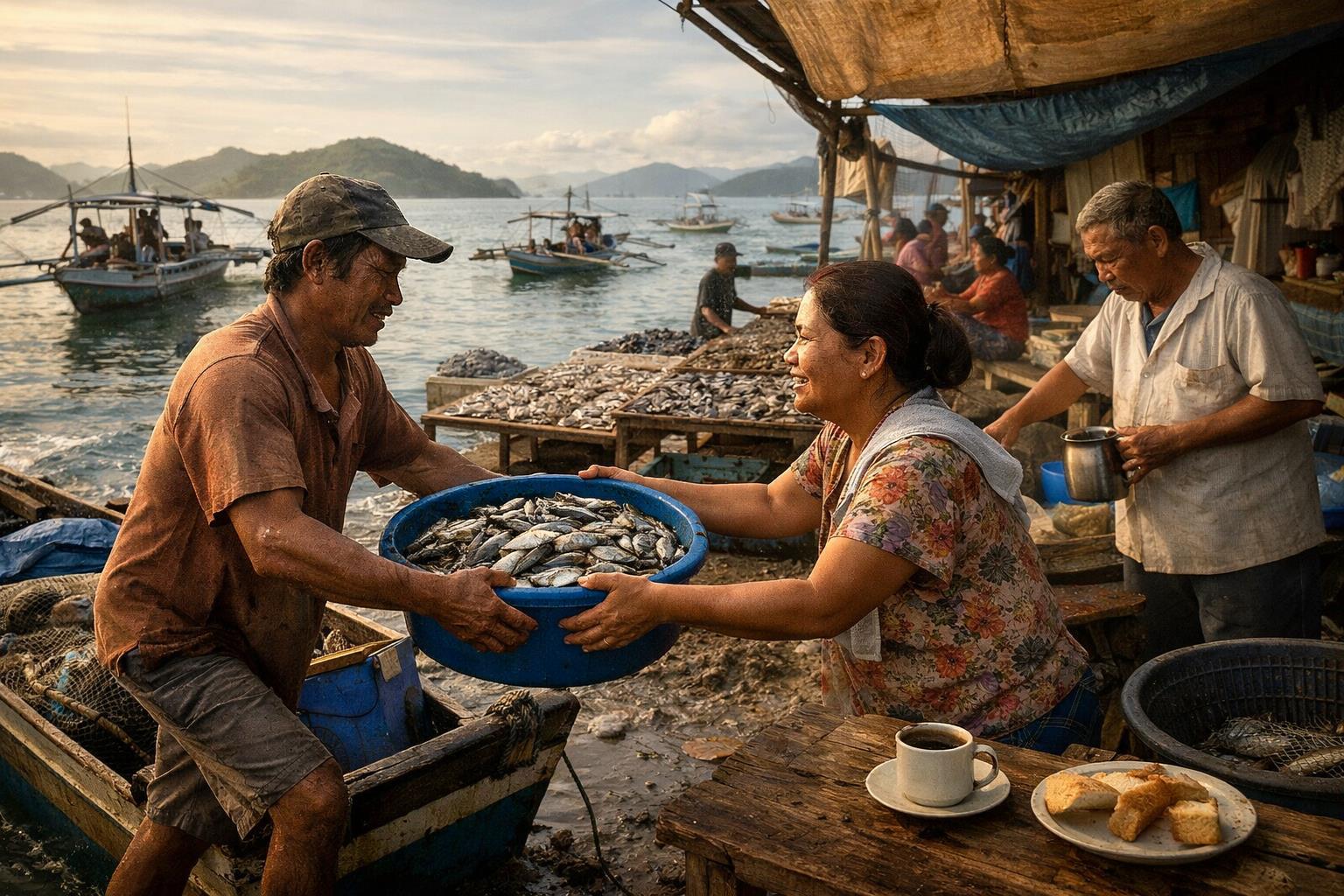
They say that it does not start right away. At first it is just buying and selling. But when someone helps you when you have nothing, that is when it starts – utang nga kabalaslan. When there was no boat, no engine, no capital, and someone provided it. When there was no money, and someone said you can take first. When you come back from fishing and there is already something given to you right away. That is when utang nga kabalaslan begins.
When they had nothing before, someone helped them so they could have a livelihood. Because of that, they remember. They remember who helped when there was no boat yet, when the engine was lacking, when there was no pangabuhian (livelihood). Kabalaslan is remembering that someone helped you when you had nothing. That is what stays.
Sometimes it is not about money. It is about the service. It is about what someone did for you. You cannot pay it with cash. You have to return it in other ways. You return it by coming back. You return it by staying. You return it by not deceiving them. You return it by continuing to deliver.
Even if the debt is already paid, the feeling stays. Even if you already paid the utang, you still feel something. You still feel that you came from them – your suki. Of course, you would feel mahuya (shy/shame/embarrassed) to leave the one you came from. If you built your livelihood through someone, and then when you can already stand on your own you transfer to others, that is not kabalaslan. That would be wala huya (no shame).
Some say utang nga kabalaslan is deep –madalom. As long as you live. As long as there is no conflict. Even if there is conflict, it does not disappear. The conflict will fade, but the utang nga kabalaslan remains. You still remember. You still come back. You still return to the one who helped you.
In buying and selling, it looks like this. Fishers still deliver to their suki even if there are others who offer a higher price. Even if the tara (weight deducted from products like crabs to account for water weight or spoils by trader) is higher, even if the deduction is heavier, if you truly have kabalaslan, you still cannot leave.
Sometimes the price is lower, but you still focus on your suki. You turn back on others. You do not go to the one with the higher price. You feel mahuya to do that. You cannot ask for more. You stay. That is how it works in pricing. That is how it works in weighing. That is how it works in deciding where to sell.
One buyer said she also has utang nga kabalaslan to the fishers. Because if they do not have fish, she also has no income. She said that the buyer depends on the fishers too. When she asks fishers, “May ara ka da isda?” and they say yes, all are happy. Because earnings will come. She said it goes both ways.
Buyers can show it by taking care of their fishers. When they arrive, they can say, “pangape di anay” (lets have coffee). They can put food out. Whoever wants to eat, eats. Some suki buyers welcome fishers and crew in the house. They attend to them. Thats how a buyer can show utang nga kabalaslan. By pag-atipan. By care.
Brokers at the big ports also show kabalaslan to their suki sellers. They are happy when a lot is delivered. They improve because they earn from the sellers – the fishers and the traders of the islands. When there is too much fish, even if no one else will buy, the broker still buys it from their suki – so the fishers can go home with something. Even if it is cheap. Even if it will only be for pang-ula (fish meal). When there is a lot of fish, and no one wants to buy, a broker can say, “baklon ko na lang sa inyo tag 100 para mapuslan niyo lang” (I’ll just buy it from you from 100 so you can just get something/some benefit) – that is not just business. That is kabalaslan. You feel it because someone looked at your hardship. Because instead of throwing it away, they still bought it. So because of that, you really want to come back. No matter what, they will buy your fish. That is why you stay.
It’s not always the same with fishers and buyers. Fishers and sellers feel it strongly. Buyers sometimes feel it too, but it shows differently. The brokers can show it during Christmas. They come with paskwa (christmas presents). They say, “dako gid ang ginbulig ya sa aton sini nga tuig” (a really big help she/he gave us this year). That is where utang nga kabalaslan shows for them.
There are negative sides. Sometimes you cannot leave even if you want to. Even if another buyer offers higher prices, you stay because you have utang nga kabalaslan. You feel tied. Nahigtan. You endure. Antuson mo na lang (just endure it). Actually the buyers need the sellers to feel it – if the fishers or sellers don’t have kabalaslan then of course the buyer will have no products.
So, some people feel pressured, especially when there is money debt. When you still have utang, and you sell to another buyer, that is when pressure comes. You are told to pay first. Sometimes not in money, but in fish. You keep delivering until the utang is paid. That is pressure. But that is different from utang nga kabalaslan. The kabalaslan is about the help that was done.
When there is no utang nga kabalaslan, life is lighter. If you have no kabalaslan, your mind is free. You can go anywhere. You can leave. You do not have to remember. But people who have no kabalaslan can just get from you and leave. That is the problem. That is when people say there is no gratitude.
It doesn’t really end. Even if you pay, it continues. Even if the debt is settled, the relationship remains. Because you remember the goodness. Kaayo. You remember who helped you from the beginning. That is why some people stay even if they already paid everything. Because without that person, they would not have built their livelihood.
Sometimes fishers leave. They try another buyer. But when something goes wrong, they come back. When they come back, they say, “may utang pa ko to mu” (I still have a debt there). They feel shy. They remember. And the buyer is happy that they returned.
Utang nga kabalaslan matters in times of need. When there is sickness, when there is no catch, when the market is bad. When there is surplus and no buyer. When there is hardship at sea or at home. When someone helped you in those times, you cannot forget. You feel it deeply. You return it when you can. Not always in money. Sometimes in staying. Sometimes in giving fish. Sometimes in helping when they need it. Even if you plan to leave someday, even if you want to buy your own boat, as long as what you are using came from that buyer, you stay. You give back so that the salig (trust) will not be lost.
Utang nga kabalaslan is consistent. It is part of the relationship. As long as there is goodness remembered. That is how it moves between island and mainland, between fishers, dryers, barangay buyers, gleaners, brokers, and family. That is how it is lived.