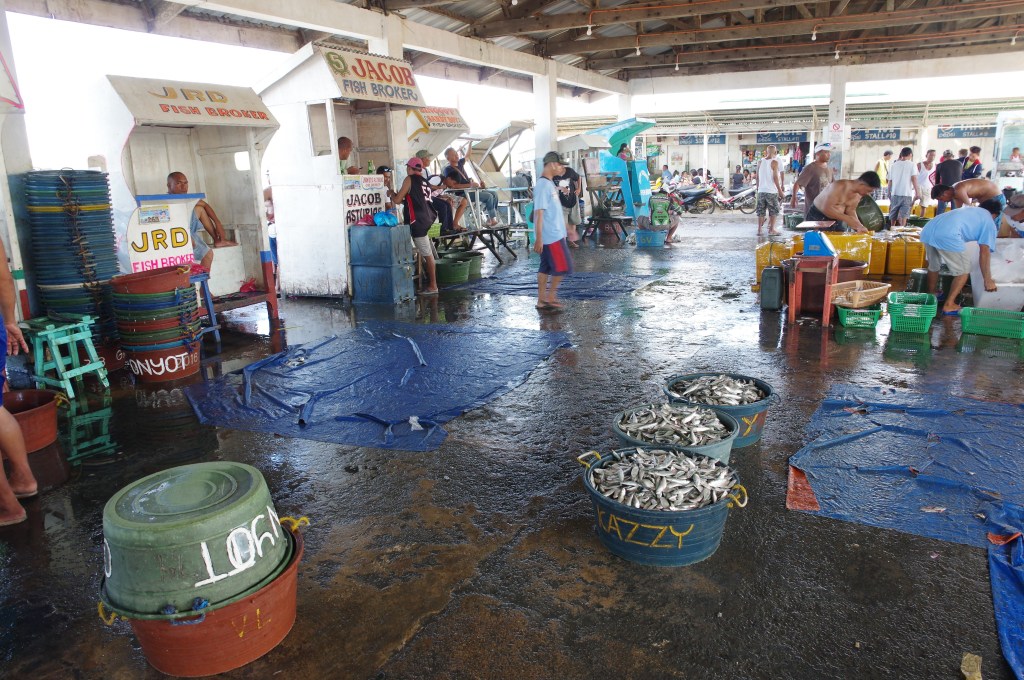
Tropical small-scale fisheries (SSF) play an important role for nutritional, food and livelihood security, supporting approximately 40 million livelihoods directly and 120 million indirectly, 98% of which are in low-income countries (4,5). Many nations need to tackle SSF issues if they are to achieve the Sustainable Development Goals (SDGs) related to sustainable resource use, poverty, nutrition and food security by 2030 (6). SSF systems are relatively more vulnerable to today’s multifaceted interlinked global drivers of change e.g. climate change events, global market crashes, pandemics (1,7). The COVID-19 pandemic has only reiterated and exacerbated the vulnerabilities in the socio-cultural, economic, environmental and governance spaces of low-income SSF (7). In these low-income systems characterized by economic instability and restricted access to formal support patronage acts as a key source of finance for responding and adapting to market and resource changes. Patronage is central to the operation, organization and thus governance of SSF by providing a flexible and rapid, though inherently unequal, source of capital in fluctuating systems (8,9). Cultural ideas underlie and define the credit or loaning and resulting indebtedness, which is both moral and financial, between patron-traders and their socially and economically inequal clients (10). From a social-ecological systems view patronage performs an essential linking function between local to global markets, fishers and their activities by channelling market demands and incentives (11,12,13). The importance of patronage in SSF is only growing due to the increasing integration of these systems into global economics (14). Critically, in adaptation processes that promote future social-ecological wellbeing, patronage has been noted to create social, temporal and spatial trade-offs or tensions through its considerable ability to mediate micro-level processes of change (8,15). The indebtedness clients find themselves in can undermine adaptive capacities to respond to future market and resource changes by, for example, increasing economic instability in fishing households over time and reducing their flexibility to make choices or negotiate trade and price. Debt and obligation also perpetuates the need to fish regardless of signals from the marine environment, disincentivises other livelihood pathways and ultimately the reciprocal dependency of clients on patrons reduces individual agency (14,16). Flexibility and agency in adapting to change, which patronage can undermine, as well as the assets to do so e.g. financial, technological, of which patronage is a source, all build adaptive capacity to minimize future impacts of major change e.g. climate change (17). Patronage offers governance a tricky problem due to the contradictory influences it has on adaptability (8). With todays’ unique set of challenges e.g. global market demands or climate change events, patron-client relationships are a critical, yet still confounded, characteristic to consider in facilitating legitimate transitions to longer-term socially and ecologically sustainable pathways (18). Widespread push to remove patrons as a link in the chain will not aid fishers in better securing livelihood and food security if formal options cannot respond flexibly and rapidly enough to the needs of low-income households. But what should be done with patrons if at certain scales they undermine adaptive capacities to respond in the future? We first need to understand what patrons are doing, their role in SSF adaptation processes and the trade-offs that are involved in drastically changing this deeply engrained fishery relation.
References
4. FAO 2015. Voluntary Guidelines for Securing Sustainable Small‐Scale Fisheries in the Context of Food Security and Poverty Eradication
5. World Bank, 2012. Hidden harvest : the global contribution of capture fisheries
6. FAO, 2017a. The relationship between the governance of small-scale fisheries and the realization of the right to adequate food in the context of the Sustainable Development Goals. FAO, Rome, Italy.
7. Bennett, N.J., et al. 2020. The COVID-19 Pandemic, Small-Scale Fisheries and Coastal Fishing Communities. Coast. Manag. 48
8. Johnson, D.S., 2010. Institutional adaptation as a governability problem in fisheries: patron–client relations in the Junagadh fishery, India. Fish Fish
9. Kininmonth, S., et al. 2017. Microeconomic relationships between and among fishers and traders influence the ability to respond to social-ecological changes in a small-scale fishery. Ecol. Soc. 22.
10. Fabinyi, M., 2012. Fishing for Fairness: Poverty, Morality and Marine Resource Regulation in the Philippines
11. Crona, B., et al. 2010. Middlemen, a critical social-ecological link in coastal communities of Kenya and Zanzibar. Mar. Policy, Coping with global change in marine social-ecological systems 34
12. Frawley, T.H., et al. 2019. Environmental and institutional degradation in the globalized economy: lessons from small-scale fisheries in the Gulf of California. Ecol. Soc. 24.
13. Nurdin, N., Grydehøj, A., 2014. Informal governance through patron–client relationships and destructive fishing in Spermonde Archipelago, Indonesia. J. Mar. Isl. Cult. 3
14. Crona, B., et al. 2015. Using social–ecological syndromes to understand impacts of international seafood trade on small-scale fisheries. Glob. Environ. Change 35
15. Ferse, S.C.A., et al., 2014. To cope or to sustain? Eroding long-term sustainability in an Indonesian coral reef fishery. Reg. Environ. Change 14
16. Stein, H.F., 1984. A Note on Patron-Client Theory. Ethos 12
17. Cinner, J.E., et al. 2018. Building adaptive capacity to climate change in tropical coastal communities. Nat. Clim. Change 8
 Liz Drury O'Neill