
Rethinking patron-client relationships in small-scale fisheries.
In small-scale fisheries, patron-client relationships (patronage) between traders and fishers are often blamed for the failure of sustainability-based development interventions aimed at improving human and ecological wellbeing. Patronage has been shown to affect adaptation to the unprecedented market and resource changes fishers face in today’s globalized world e.g. pandemics, climate change. The role of the relationship, although an important source of insurance for low-income fishing households worldwide, is hotly contested by fishery practitioners and managers who often want to break it. This project aims to significantly advance understanding of patronage for adaptation and how it may support or hinder the sustainable development of fisheries by using a multi-method approach. I use interpretive research to prioritise the experiences and understandings of fishers and traders within patronage. Behavioral economics examines key fishing and trading decisions in response to resource and market changes that emerged as important for adaptation. Participatory methods allow us to understand what future scenarios participants envision for patronage in their fishery. This intersection of traditions and perspectives will provide more traction in assessing the unique position patrons hold today linking globalizing markets with small-scale fishers and their fishing practises.
Summary of the project
In small-scale fisheries, patrons – also called middlemen, intermediaries or traders – are often blamed for the failure of sustainability-based development interventions aimed at improving human and ecological wellbeing. Essentially, patrons finance their clients’ (fishers) activities through loans and credit, receiving a supply of seafood and loyalty in return. Client households become indebted, morally and financially, and payback relies on fishing. Patron-client relationships, prevalent globally in small-scale production systems, have been shown to undermine individual agency, choice and adaptive capacity, increase economic instability in client-fisher households and incentivise unsustainable fishing practises- all of which affects adaptation processes and the future of the fishery. Small-scale fisheries are challenged with adapting to today’s global threats, like climate change, market shocks or pandemics. However governance and enforcement issues, widespread biodiversity loss and ecosystem health decline characterise many of these fisheries. For fisher communities, with restricted access to technology, formal support and finance, patrons provide essential and flexible capital to respond to some of the many changes e.g. catch variability, typhoons, or household income loss.
Small-scale fisheries have never before been so intensely embedded in global economics, nor have the nature of today’s global changes been experienced before. This places patrons in a historically unique position in linking fishers and markets. As such, the role of the patron-client relationship, although an important source of insurance for low-income households worldwide, is hotly contested by fishery practitioners and managers who often want to break it. Although the patron-client relationship is widely studied, we still know little about the complex roles it plays in adaptation processes and the sustainable development of small-scale fisheries long-term.
This project aims to address this question and understand what aspects of patronage (used here as short for patron-client relationships) contribute, when, how and for who in adapting to market and resource changes. Especially how these adaptations promote or undermine sustainable livelihood and fishery development. We take a well-studied empirical case of patronage in the small-scale fisheries of the Philippines, locally referred to as the suki system.
To address the aim the project is split into three work packages as follows;
- We draw on qualitative methods from interpretive social science research to examine patronage as a deeply engrained relationship within the Philippine fishery society. A relationship which is understood and negotiated differently according to socio-institutional factors e.g. gender. Here individual narratives and dyadic interviews of spouses will be used to map and examine environmental and market changes that patron-clients have navigated in the past and the ways they have adapted.
- We will use data from 1. to design and contextualise behavioural economic experiments to test key fishing and financial decisions that emerged as important for making adaptive changes. This approach allows us to better understand influences on decisions that are less consciously recognised e.g. risk attitudes, cultural norms, through presenting participants with choices that have financial consequences.
- We will use participatory scenario planning to collaboratively explore, with fishers and traders, the good and bad of patronage long-term, possible alternatives and how patronage should be incorporated into government planning for improving fishery livelihoods, market systems and marine ecosystem health. Resulting scenarios will be presented to policy and management.
A gender lens throughout research allows us to examine the socio-institutional factors that shape differences in behaviour, relationships and adaptation processes. This makes our work sensitive to the social differences and inequalities that impact the complex role patronage has in the governance of small-scale fisheries. Together these work packages will significantly advance understanding of patron-client relationships and their influence on sustainable fishery and market outcomes under change.
The aim of this project is to explain the role of the pervasive patron-client relationship (hereinafter ‘patronage’) in adaptation processes and how they may support or hinder the sustainable development of tropical small-scale fisheries. I want to understand what aspects of patronage contribute, when, how and for who, in adapting to market and resource changes – two major sources of variability and uncertainty for fishers and traders on a daily and longer-term basis. These types of changes directly impact how tropical small-scale fisheries, characterised by economic, social and ecological vulnerability, provide livelihood, food and nutritional security for the millions of people that depend on them worldwide (1, 2).
With this in mind I address my aim through three research questions:
- What socio-institutional and cultural factors (e.g. gender roles, reciprocal obligations) shape fishers’ and traders’ experience and understanding of patronage?
- How do these experiences of patronage influence the decision-making of fishers and traders in response to market and resource changes?
- What future scenarios do fishers and traders envision for patronage in their fishery?
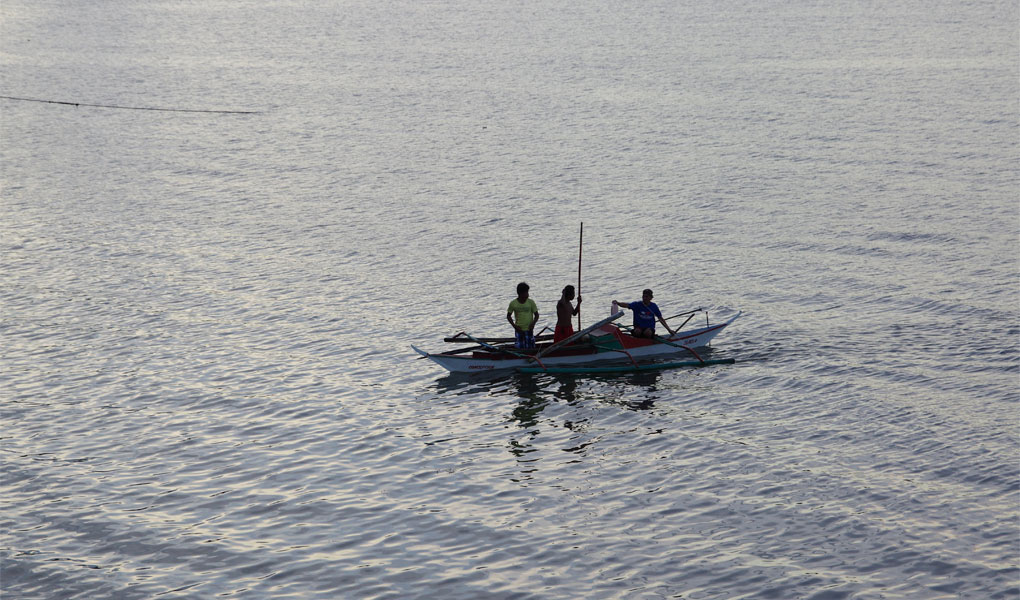
Squid jiggers on the way home for the evening, Concepcion, Iloilo. Photo: E. Drury O’Neill.
To answer these questions the project uses an interdisciplinary methodological approach drawing on theory and methods from interpretive research, behavioural economics and social-ecological systems and resilience thinking. Narrative interviews and analyses map and explore life histories of patron-clients with respect to important market and resource changes e.g. Pandemics or Typhoon events, but also to untangle implicit meanings and influences of patronage in responding to such changes over-time. Dyadic interviews bring spouses together to examine financial and fishing-related decision-making to account for the gendered and relational dynamics of adaptation processes and interpretations of patronage. Behavioural economic field experiments test key fishing and finance decisions made by both fishers and their patrons under different market and resource scenarios. This tradition allows me to address influences of behavioural responses to changes at sea or in the market that are unconsciously driven e.g. by social or cultural contexts, financial risk attitudes. Participatory scenario planning exercises will be used with fishers and trader-patrons to collaboratively explore future fishery pathways and where, how or if patronage fits in. More specifically, tradeoffs will be identified that emerge between the adaptations that patron-clients make at the microscale and future human and ecological wellbeing. A gender lens is adopted throughout the project as it is sensitive to social differences and the intersecting socioinstitutional factors, like power relations, social identities or wealth, that shape abilities to navigate change (3).
References
- Allison, E.H., et al. 2011. Poverty Reduction as a Means to Enhance Resilience in Small-scale Fisheries. Small-Scale Fish. Manag. Framew. Approaches Dev
- FAO, 2018. The State of World Fisheries and Aquaculture 2018: Meeting the sustainable development goals
- Cohen, P.J., et al. 2016. Understanding adaptive capacity and capacity to innovate in social–ecological systems: Applying a gender lens. Ambio 45
Small-scale fishery markets, patronage & adaptation
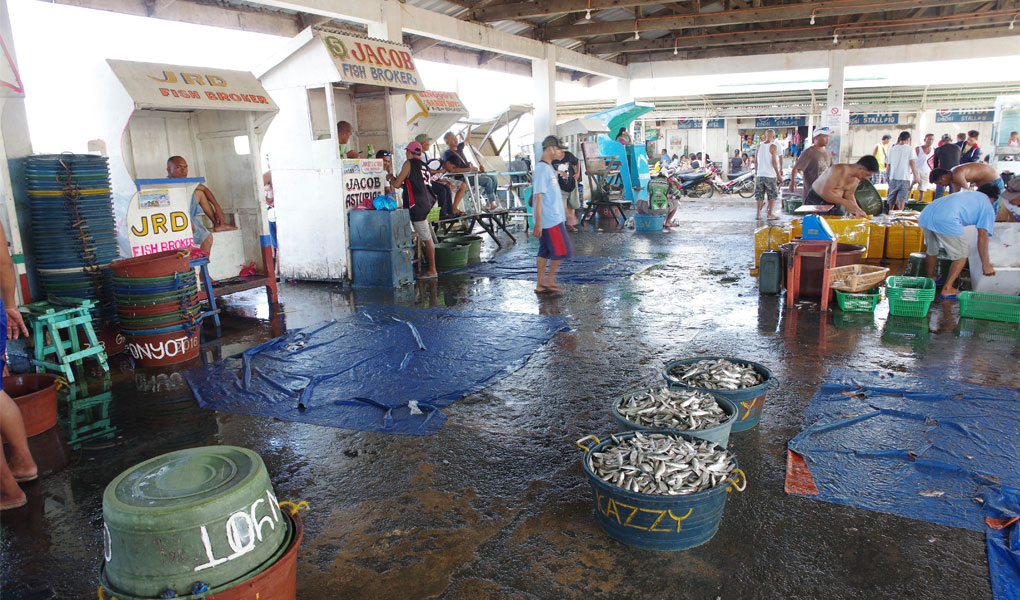
Concepcion port, Iloilo, 2015. Brokers, the main patrons, can be seen in their booths around the market place. Photo: E. Drury O’Neill.
Tropical small-scale fisheries (SSF) play an important role for nutritional, food and livelihood security, supporting approximately 40 million livelihoods directly and 120 million indirectly, 98% of which are in low-income countries (4,5). Many nations need to tackle SSF issues if they are to achieve the Sustainable Development Goals (SDGs) related to sustainable resource use, poverty, nutrition and food security by 2030 (6). SSF systems are relatively more vulnerable to today’s multifaceted interlinked global drivers of change e.g. climate change events, global market crashes, pandemics (1,7). The COVID-19 pandemic has only reiterated and exacerbated the vulnerabilities in the socio-cultural, economic, environmental and governance spaces of low-income SSF (7). In these low-income systems characterized by economic instability and restricted access to formal support patronage acts as a key source of finance for responding and adapting to market and resource changes. Patronage is central to the operation, organization and thus governance of SSF by providing a flexible and rapid, though inherently unequal, source of capital in fluctuating systems (8,9). Cultural ideas underlie and define the credit or loaning and resulting indebtedness, which is both moral and financial, between patron-traders and their socially and economically inequal clients (10). From a social-ecological systems view patronage performs an essential linking function between local to global markets, fishers and their activities by channelling market demands and incentives (11,12,13). The importance of patronage in SSF is only growing due to the increasing integration of these systems into global economics (14). Critically, in adaptation processes that promote future social-ecological wellbeing, patronage has been noted to create social, temporal and spatial trade-offs or tensions through its considerable ability to mediate micro-level processes of change (8,15). The indebtedness clients find themselves in can undermine adaptive capacities to respond to future market and resource changes by, for example, increasing economic instability in fishing households over time and reducing their flexibility to make choices or negotiate trade and price. Debt and obligation also perpetuates the need to fish regardless of signals from the marine environment, disincentivises other livelihood pathways and ultimately the reciprocal dependency of clients on patrons reduces individual agency (14,16). Flexibility and agency in adapting to change, which patronage can undermine, as well as the assets to do so e.g. financial, technological, of which patronage is a source, all build adaptive capacity to minimize future impacts of major change e.g. climate change (17). Patronage offers governance a tricky problem due to the contradictory influences it has on adaptability (8). With todays’ unique set of challenges e.g. global market demands or climate change events, patron-client relationships are a critical, yet still confounded, characteristic to consider in facilitating legitimate transitions to longer-term socially and ecologically sustainable pathways (18). Widespread push to remove patrons as a link in the chain will not aid fishers in better securing livelihood and food security if formal options cannot respond flexibly and rapidly enough to the needs of low-income households. But what should be done with patrons if at certain scales they undermine adaptive capacities to respond in the future? We first need to understand what patrons are doing, their role in SSF adaptation processes and the trade-offs that are involved in drastically changing this deeply engrained fishery relation.
References
- FAO 2015. Voluntary Guidelines for Securing Sustainable Small‐Scale Fisheries in the Context of Food Security and Poverty Eradication
- World Bank, 2012. Hidden harvest : the global contribution of capture fisheries
- FAO, 2017a. The relationship between the governance of small-scale fisheries and the realization of the right to adequate food in the context of the Sustainable Development Goals. FAO, Rome, Italy.
- Bennett, N.J., et al. 2020. The COVID-19 Pandemic, Small-Scale Fisheries and Coastal Fishing Communities. Coast. Manag. 48
- Johnson, D.S., 2010. Institutional adaptation as a governability problem in fisheries: patron–client relations in the Junagadh fishery, India. Fish Fish
- Kininmonth, S., et al. 2017. Microeconomic relationships between and among fishers and traders influence the ability to respond to social-ecological changes in a small-scale fishery. Ecol. Soc. 22.
- Fabinyi, M., 2012. Fishing for Fairness: Poverty, Morality and Marine Resource Regulation in the Philippines
- Crona, B., et al. 2010. Middlemen, a critical social-ecological link in coastal communities of Kenya and Zanzibar. Mar. Policy, Coping with global change in marine social-ecological systems 34
- Frawley, T.H., et al. 2019. Environmental and institutional degradation in the globalized economy: lessons from small-scale fisheries in the Gulf of California. Ecol. Soc. 24.
- Nurdin, N., Grydehøj, A., 2014. Informal governance through patron–client relationships and destructive fishing in Spermonde Archipelago, Indonesia. J. Mar. Isl. Cult. 3
- Crona, B., et al. 2015. Using social–ecological syndromes to understand impacts of international seafood trade on small-scale fisheries. Glob. Environ. Change 35
- Ferse, S.C.A., et al., 2014. To cope or to sustain? Eroding long-term sustainability in an Indonesian coral reef fishery. Reg. Environ. Change 14
- Stein, H.F., 1984. A Note on Patron-Client Theory. Ethos 12
- Cinner, J.E., et al. 2018. Building adaptive capacity to climate change in tropical coastal communities. Nat. Clim. Change 8
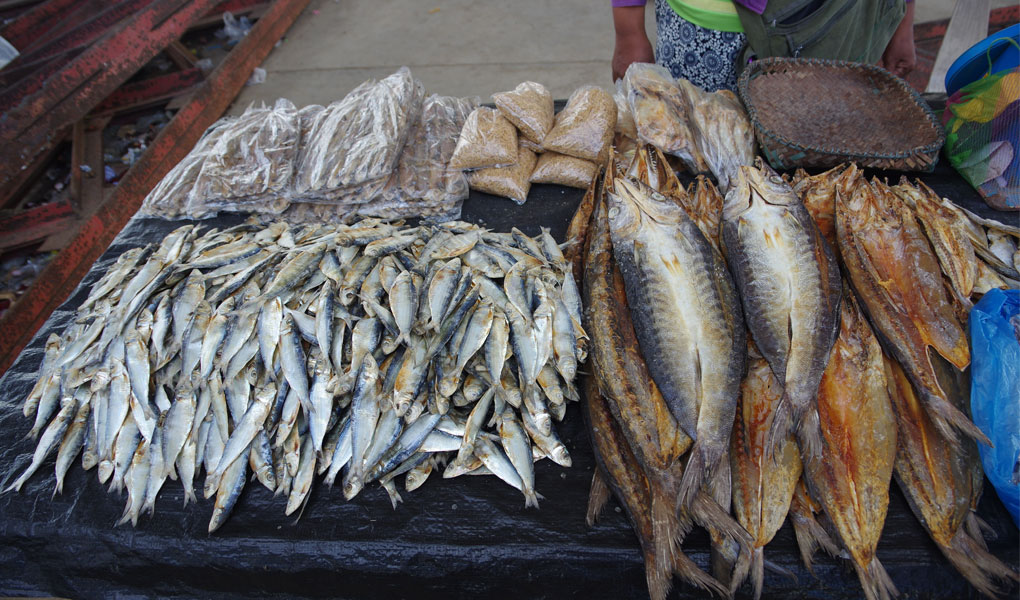
Some dried, fried, processed fish and seafood for sale in Concepcion market, Iloilo, 2015- all sourced from the local small-scale/municipal fishers. Photo: E. Drury O’Neill.
Approach
The project is divided into three work packages (WPs). WP1, which attends to research questions 1-2, involves the combination of narrative and dyadic interviews grounded in interpretive research. WP2 builds on the learnings of WP1 in designing behavioural economic field experiments and answers questions 1-2 from an angle based in this tradition. The final WP3 draws on resilience thinking to answer question 3 by using participatory scenario planning exercises with fishers and trader-patrons. All empirical research will be carried out in Panay, Visayas in the Philippines where I draw upon my PhD work (19,20).
Gender perspectives
I take a gender lens to examine the socio-institutional factors that shape differences in behaviour, relationships and adaptation processes (3,21). In this way patronage is viewed as a key power-relation which can promote or undermine social inclusion and equitable improvements of capacities to adapt to future change. This lens also allows me to nuance human behaviour scholarship in fisheries beyond that of industrial fishermen to fishers and patrons of different types (e.g. sex, age, fishing style, business size) and how they relationally negotiate decision-making and adaptation processes.
My Work Packages (WPs)
WP1 An interpretive approach to understanding patronage
Theoretical approach
An interpretive approach is adopted to explore how patrons and fishers experience and understand patronage, and the ways in which they navigate patron-client relationships in response to change e.g. typhoons. Interpretive approaches focus on the meanings that shape human actions, and are particularly useful in situations where the meanings of a particular phenomenon are multiple and/or ambiguous (22). The meanings surrounding patronage are particularly contested. While fisheries managers and researchers often portray patronage as purely exploitative and harmful to fishers, anthropological and political ecological work helps to situate patronage within a broader cultural context of reciprocal responsibilities and obligations (e.g. the suki relationship (23) ) which opens up for a broader range of possible meanings among participants (10,24). An interpretive approach will therefore help to prioritise the experiences and understandings of the fishers and traders actually operating within patronage, and ensure that the project as a whole begins from a grounded, contextual understanding of the multiple meaning(s) of patronage.
Methods
I will engage in individual, narrative-based life history interviews with circa 10 traders and 20 fishers, with the aim of exploring how participants have navigated patronage relationships in response to social-ecological changes (25). Each participant will be interviewed twice, to explore important experiences in-depth and to further examine any areas of ambiguity. Building on revealed events and related decision-making dyadic semi-structured interviews (26,27) will then be used with the same participants now including their husband, wife, partner or other household head arrangement. I will relationally explore intra-household tactical and strategic decision-making, as a gendered bargaining process, which shapes household outcomes and impacts fishing and trading activities, indebtedness to patrons, loan-giving to clients and other livelihood decisions. By combining the individual narratives with dyadic interviews I will map and examine responses to change at different scales as mediated by patronage to create new multi-perspective understandings of how it works and for who. Narrative life history interviews require a deep understanding of context and language on the part of the interviewer. As such I would like to engage anthropology students at the University of Philippines Visayas (UPV) Division of Social Science (of which Ferrer is the Dean) with an interest and relevant background in fishing communities to help interpret, transcribe and translate the interviews.
WP2 A behavioural approach to patron-clients’ experience of market and resource changes
Theory
(Neo-)classical economic models of human behaviour, till now dominant in policy discourse, assume rational decision-makers that make use of all available information, including probabilities of future events, to maximize expected profit, income or utility. Behavioural economics challenges this view, recognizing that decision-makers are often better characterized as boundedly rational (28), that they typically violate principles of maximization, especially in complex and uncertain environments. Instead they rely on heuristics (29) which are sometimes biased in systematic ways (30). An emerging field within behavioural economics further recognizes that behavioural influence goes beyond the immediate situation and includes also more durable social, cultural and biophysical contexts (31). To study behavioural strategies of fishers and their patrons in complex social-ecological environments one needs to acknowledge such behavioural features and influences as they can have a profound impact on decisions and consequent outcomes (32).
Methods
To elicit data on behavioural responses to market and resource changes I will perform a series of behavioural field experiments subsequently complemented by structured-interviews and focus group discussions. There are many different types of behavioural experiments (33) which can measure the impact of specific variables on behaviour. My field experiments will be designed as choice experiments where each participant (fisher-client or patron) over 10-16 rounds (to be determined) is confronted with different market or resource conditions. In each round I ask participants to make a decision from a set of options which have economic consequences. Participants will be randomly allocated to two main groups- one facing a resource change scenario and the other a market change. Both groups will start with a ‘normal condition’ scenario for the market and resource but also with respect to indebtedness and loan potentials from the patron-client relationship (all based on insights from WP1). Fisher’s choice options can be translated to extraction levels and an expected payoff, with an associated risk level. Patrons’ options can be translated to a supply of loans where each loan level is associated with an expected payoff and a certain level of risk. After 5-8 rounds there will be a dramatic change (the treatment), after which participants will continue with their choices for another 5-8 rounds in new conditions. Exactly what type of market and resource change and scenario conditions (e.g. restricted market access, fish stock decline) to test will be determined based on WP1 insights but will have a substantial effect on expected payoff (level and risk). Post experiment interviews will capture selected individual characteristics (e.g., gender, relation to a patron or client, financial situation, risk attitudes) that may also influence behaviour. Discussion groups offer a chance to explore how participants experienced the experiment in relation to reality (socio-cultural and biophysical context) and the community dynamics around responding to these types of changes.
WP3 What to do about Patronage in complex dynamic systems?
Theory
Within the umbrella field of sustainability science the approach of resilience thinking allows one to ask questions, learn and improve understanding of complex intertwined social-ecological systems (SESs) (34). The SES concept serves as a way to organize and understand complexity, uncertainty and unpredictability in fisheries and has also recently led scholars to examine important social-ecological linkages in SSF, like patron-client relationships (11,12). Traits of SESs used to explain processes of change include adaptability, resilience and transformability (34). In resilience thinking adaptation refers to human actions in responding to change that sustain development on current pathways (34). Resilience as the capacity to deal with change, to persist and to continue to develop with ever changing environments (34). Transformation is about shifting development into other emergent pathways and even creating new ones (34). Six interlinked domains of social factors that contribute to adaptive capacity e.g. flexibility and agency, are said to provide resilience to changing social or ecological conditions and I will take a focus on the trade-offs e.g. temporal or social, between them but also with the broader fishery system’s ecological resilience (17).
Methods
I draw on SES and resilience literature to help imagine and develop future pathways of the SSF system with alternatives to, restructured or radically different patron-client relationships e.g. auction systems, direct sales to consumers, formalized patron contracts, group bargaining, market information sharing. I will use a series of participatory scenario planning (PSP) (35) with research participants (fishers and traders) as a means to foster long-term and complex thinking around the future of patronage in their system and identify trade-offs i.e. winners and losers, when and where. Sustainable development pathways of the municipality will be created as storylines through different methodological tools e.g. group discussion, individual reflection, depending on participants. PSP will allow for engagement with critical uncertainties e.g. future fish stock trends, and the contradictions presented by patronage under different situations. I will examine desired futures as driven by participants and use the resulting scenarios as decision-support for local fishery governance. Data will be qualitatively analysed to develop narratives which will then be presented to secondary stakeholders i.e. policy-makers, municipal and provincial managers, practitioners, through workshops involving graphic depictions and storytelling techniques.
References
- Cohen, P.J., et al. 2016. Understanding adaptive capacity and capacity to innovate in social–ecological systems: Applying a gender lens. Ambio 45
- FAO 2015. Voluntary Guidelines for Securing Sustainable Small‐Scale Fisheries in the Context of Food Security and Poverty Eradication
- World Bank, 2012. Hidden harvest : the global contribution of capture fisheries
- FAO, 2017a. The relationship between the governance of small-scale fisheries and the realization of the right to adequate food in the context of the Sustainable Development Goals. FAO, Rome, Italy.
- Bennett, N.J., et al. 2020. The COVID-19 Pandemic, Small-Scale Fisheries and Coastal Fishing Communities. Coast. Manag. 48
- Johnson, D.S., 2010. Institutional adaptation as a governability problem in fisheries: patron–client relations in the Junagadh fishery, India. Fish Fish
- Kininmonth, S., et al. 2017. Microeconomic relationships between and among fishers and traders influence the ability to respond to social-ecological changes in a small-scale fishery. Ecol. Soc. 22.
- Fabinyi, M., 2012. Fishing for Fairness: Poverty, Morality and Marine Resource Regulation in the Philippines
- Crona, B., et al. 2010. Middlemen, a critical social-ecological link in coastal communities of Kenya and Zanzibar. Mar. Policy, Coping with global change in marine social-ecological systems 34
- Frawley, T.H., et al. 2019. Environmental and institutional degradation in the globalized economy: lessons from small-scale fisheries in the Gulf of California. Ecol. Soc. 24.
- Nurdin, N., Grydehøj, A., 2014. Informal governance through patron–client relationships and destructive fishing in Spermonde Archipelago, Indonesia. J. Mar. Isl. Cult. 3
- Crona, B., et al. 2015. Using social–ecological syndromes to understand impacts of international seafood trade on small-scale fisheries. Glob. Environ. Change 35
- Ferse, S.C.A., et al., 2014. To cope or to sustain? Eroding long-term sustainability in an Indonesian coral reef fishery. Reg. Environ. Change 14
- Stein, H.F., 1984. A Note on Patron-Client Theory. Ethos 12
- Cinner, J.E., et al. 2018. Building adaptive capacity to climate change in tropical coastal communities. Nat. Clim. Change 8
- Bailey, M., et al. 2016. Fishers, Fair Trade, and finding middle ground. Fish. Res., Special Issue: Fisheries certification and Eco-labeling: Benefits, Challenges and Solutions 182
- Drury O’Neill, E., et al. 2019a. From typhoons to traders: the role of patron- client relations in mediating fishery responses to natural disasters. Environ. Res. Lett.
- Drury O’Neill, E., et al. 2019b. An Experimental Approach to Exploring Market Responses in Small-Scale Fishing Communities. Front. Mar. Sci.
- Lau, J.D., et al. 2021. Gender equality in climate policy and practice hindered by assumptions. Nat. Clim. Change 11
- Schwartz-Shea, P., Yanow, D., 2013. Interpretive research design: Concepts and processes. Routledge.
- Pomeroy, R. S. 1992. Fish Marketing in the Philippines: Is the ‘Suki’ Symbiotic or Parasitic? Naga 15, no. 3 (1992)
- Turgo, N., 2016. ‘Laway lang ang kapital’ (Saliva as capital): Social embeddedness of market practices in brokerage houses in the Philippines. J. Rural Stud. 43, 83–93.
- Jessee, E., 2018. The Life History Interview, in: Liamputtong, P. (Ed.), Handbook of Research Methods in Health Social Sciences
- Morgan, D.L., et al. 2013. Introducing Dyadic Interviews as a Method for Collecting Qualitative Data. Qual. Health Res.
- Twyman, J.,et al. 2015. Gendered Perceptions of Land Ownership and Agricultural Decision-making in Ecuador: Who Are the Farm Managers? Land Econ. 91
- Simon, H.A., 1955. A Behavioral Model of Rational Choice. Q. J. Econ. 69
- Gigerenzer, G., Gaissmaier, W., 2011. Heuristic Decision Making. Annu. Rev. Psychol. 62
- Tversky, A., Kahneman, D., 1992. Advances in Prospect Theory: Cumulative Representation of Uncertainty. J. Risk Uncertain. 5
- Schill, et al. 2019. A more dynamic understanding of human behaviour for the Anthropocene. Nat. Sustain. 2
- World Bank, 2015. World Development Report 2015: Mind, Society, and Behavior. The World Bank.
- Harrison, G.W., List, J.A., 2004. Field Experiments. J. Econ. Lit.
- Folke, C., 2016. Resilience (Republished). Ecol. Soc. 21.
- Oteros-Rozas, E., et al. 2015. Participatory scenario planning in place-based social-ecological research: insights and experiences from 23 case studies. Ecol. Soc. 20.
- Ferrer, A.J.G., 2016. Fisheries Management Options for Visayan Sea, Philippines: The Case of Northern Iloilo.Springer Singapore
- Hamann, M., et al. 2018. Inequality and the Biosphere. Annu. Rev. Environ. Resour. 43
- FAO, 2017 Towards gender-equitable small-scale fisheries governance and development
- Meinzen-Dick, R.,et al. 2016. Games for groundwater governance: field experiments in Andhra Pradesh, India. Ecol. Soc.
Meet the Patrons team!
Principal investigator
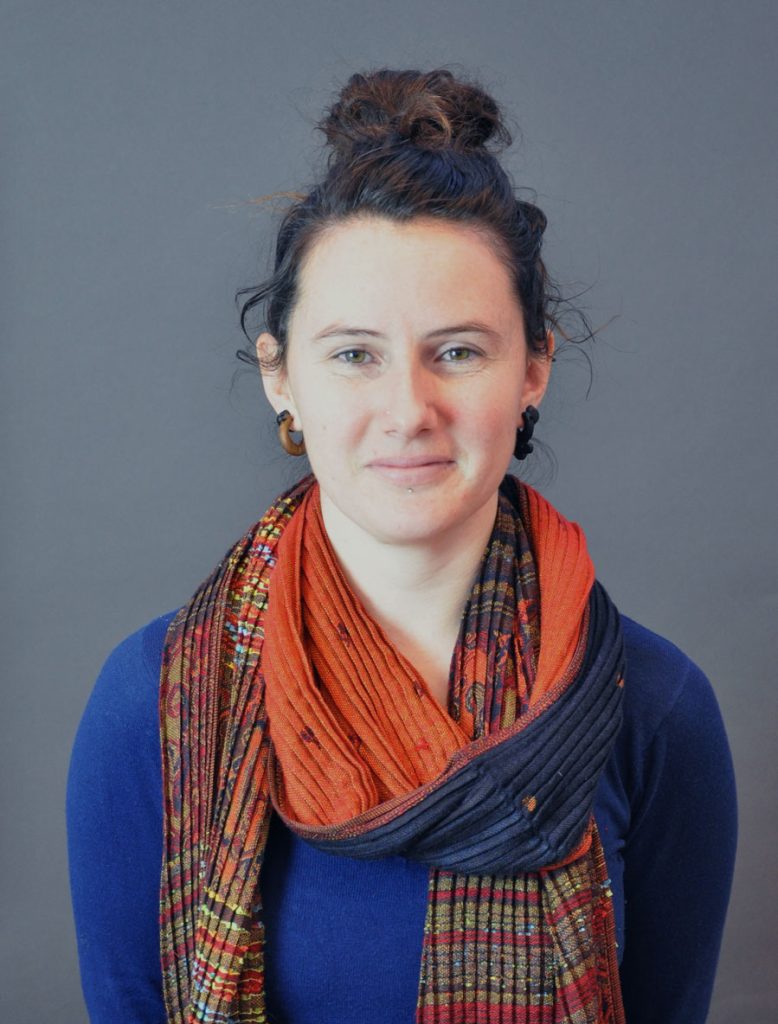
Liz Drury O’Neill
Liz will lead the project as an early career researcher will the help of her very valuable team members. She will be on full parental leave till at least mid 2023 and part time back at work from then on.
In collaboration with:

Professor Alice Joan de la Gente Ferrer
Prof Alice acts as my UPV (University of the Phillipines Visayays) host and a gender, SSF governance and case study expert. Alice will oversee all fieldwork activity, employing and equipping an established research team from UPV and will also provide critical advice on political, ethical and cultural considerations throughout the project. For info on Alice’s work see: https://scholar.google.com.ph/citations?user=2g_eV7EAAAAJ&hl=en
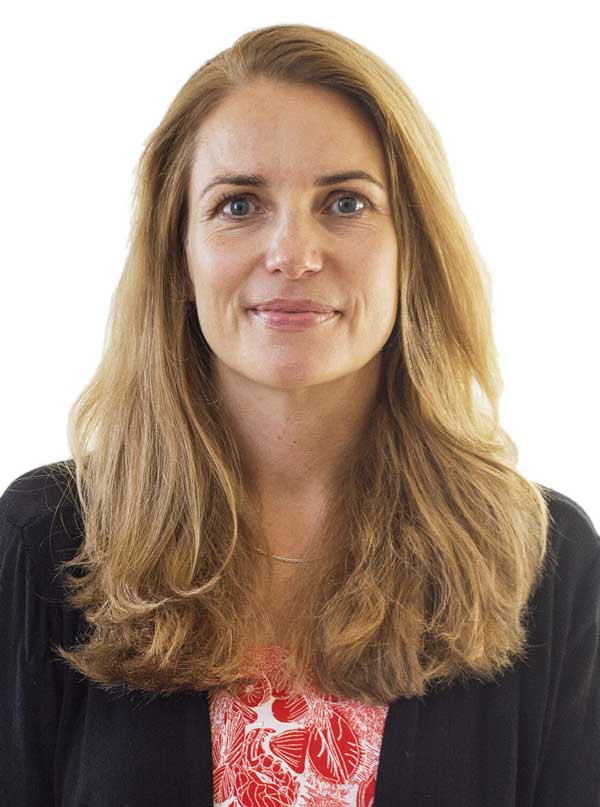
Dr Therese Lindahl
Dr Therese Lindahl is an expert in behavioural economics and will be instrumental in the design and analysis of work package 2. Therese has extensive experience in designing and conducting different types of experiments both in the lab (with students) and field settings (with small- scale fishers). For more info on Therese’s work see: https://www.stockholmresilience.org/meet-our-team/staff/2014-03-12-lindahl.html
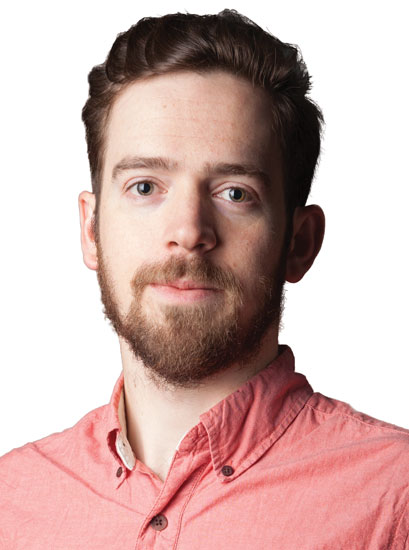
Dr Simon Patrick West
Simon will hold an advisory position throughout work package 1 and the resulting publication(s) as an expert in Interpretive research. Simon will provide guidance in design of methods, field instruments and interpretation of data. For info on Simon’s work see: https://www.stockholmresilience.org/meet-our-team/staff/2012-10-10-west.html

Professor Robert Bob Pomeroy
Prof Bob is a fishery policy, management and development expert. His background in SSF governance and resource economics in South East Asia will ensure the quality of economic analysis as well as project relevance and applicability for governance actors. For more info on Bob’s work see: https://are.uconn.edu/person/robert-s-pomeroy/
Keep an eye on my blog where I post about the project through Research Diaries.
Summer 2025
I had the chance to present some preliminary findings to Monterey Bay Aquarium, BFAR6 (The Bureau of Fisheries and Aquatic Resources) and UPV (University of the Philippines Visayas) who are collaborating on a project also based in Concepcion – but focused on blue swimming crabs. Patrick Co from Monterey found me online and messaged me to chat as part of their project work is looking at informality and the patron-client link in the crab value chain as they try to upgrade the chain and improve livelihoods for crab fishers. See some of my preliminary results I shared from our first trip in 2024 below (see my research diaries 1-4 for more info on the fieldwork).


January 2025
As of 18th of January 2025, we are back to Iloilo to do the second round of fieldwork and living! Same place, same people  Barangay Tambaliza sa Concepcion!
I am STILL in the middle of qualitatively coding 90 transcripts to create a grounded theory that might explain how the suki relationship functions and plays a role in the adaptive capacity of fishing households dealing with environmental and market changes. I will take the coding results back to all the participants to go through them and make sure they make sense.
My coding looks like this now, but a lot more messy!:

Now it’s time for behavioral economic experiments to understand better fisher’s responses to changes in their surroundings as filtered through the suki system, stay tuned for more, I will write some research diaries.
Spring 2024
The first trip ended April 15th 2024 and consisted of cerca, 60 in-depth ordinary language interviews with fishers (men and women) about the suki-relationship, we asked them things like (in Hiligaynon):
- Can you tell me about your suki relationship, how does it work?
- What words/concepts do you associate with your suki relationship? [e.g. utang na-loob; huya]
- When and how did you first meet your suki?
- Can we talk about [a change event e.g. COVID 19] – what happened with your suki then?
- How do you feel about your suki relationship now? [state of the relationship, e.g. is there trust?]
- So, from your experience, is the suki system good or bad?
- What makes a good suki relationship?
- What makes a bad one?
- Some people say we need to do away with the suki system because it’s exploitative – what do you think about that?
- Let me ask you a big question, thinking back over our interview, what does your suki relationship mean to you?
- How did you find these questions – is there anything else I need to know about suki?
We then went back to a subsample of these 60 fishers, 30 of them and did dyadic interviews with them and their partners/husbands/wives to ask about household decision-making and what role the suki plays within this and dealing with change, we asked them things like;
- Can you talk us through how you make financial decisions in your household?
- [example] If you think back to the last financial decision you had to make, what happened?
- [if they didn’t mention utang and suki] If you have ever had an utang from a suki, can you talk us through how you made that decision?
- [think about a change event that they might of mentioned before and ask about decision-making – related to that if relevant, ask COVID last resort]
- What role did your sukianay play in these decisions related to [change event]?
- How do you feel about your sukianay and the role of sukianay in your financial decisions at home? [NB examples]?
- How do you feel about your sukianay when there has been a big change or shock or unexpected event for your household? [trying to get at the bigger or longer term decisions]
I will analyse these transcripts to present them back in conservational form February – March 2025.
Here you can find stories based on the transcripts of fieldwork in 2024 and 2025 in Western Visayas Region 6. Sentences, words, concepts and expressions from interview transcripts with all types of fishers and buyers/traders were used to create composite characters so participants remain anonymous. These stories reflect their experiences of patronage in their coastal economy – I wrote these stories so their perspectives of this relationship (patron-client) are shared.
Sukianay (as patronage is known in the Philippines) goes well beyond the blue. Patrons’ finance flows frequently to schooling, nutritional security and healthcare – ultimately intertwining various areas of social life into marine ecosystem dynamics through repayment. Rather than dismissing patron-client relations as an obstacle to sustainability (which is frequently done at various levels), recognizing them as an adaptive yet contested institution provides a more contextualized approach to blue market governance. Here I try to provide some rich details on the contested relationship which doesn’t easily fit into reports or papers.
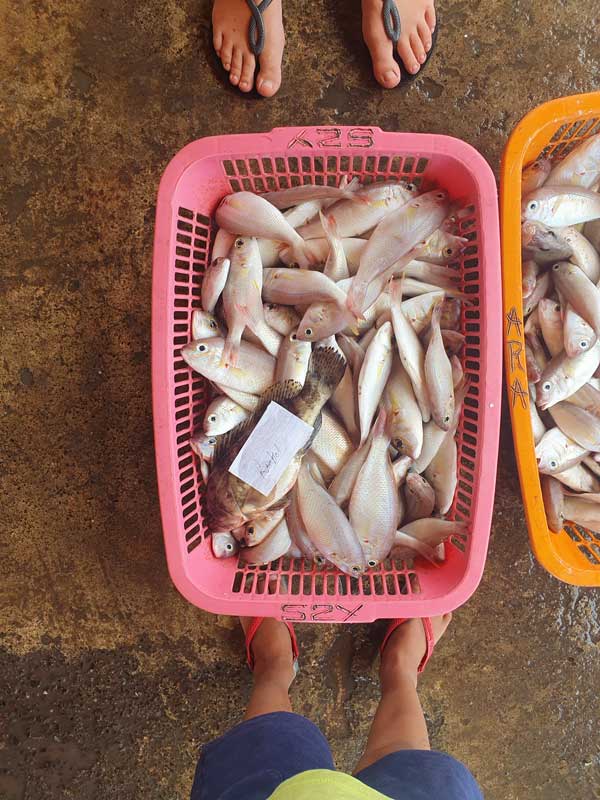
Introduksyon
Sa sini nga seksyon makita ang apat nga istorya nga ginporma halin sa mga interbyu nga ginpatigayon sa mga partisipante sang 2024 kag 2025 sa ilalom sang proyekto nga Patron of the Seas. Ini nga mga istorya nagapakita sang sukianay halin sa panan-aw sang mangingisda, sang barangay buyer nga naga-uga sang isda, kag sang brokerukonkomisyonista sa pantalan. Ang mga pulong, emosyon, kag sitwasyon nga ginpresentar halin sa sini nga mga istorya ginbase sa aktwal nga mga interbyu sang mga aktor nga ini.
Kabug-usan nga Paghulagway
Sa pagtipon, ini nga mga istorya nagapakita nga ang sukianay indi lang bahin sa pagbaligya kag pagbakal. Mas dako pa ini—kaupod diri ang relasyon, obligasyon, kag pamaagi sang pangabuhi sa tunga sang mga kahimtangan nga indi sigurado. Ginapakita sini nga ang mga desisyon sa small-scale fisheries ginahulma indi lang sang presyoukonmga balaod, kundi sang pagsalig, utang, pag-atipan, kag adlaw-adlaw nga realidad sang kabuhi. Paagi sa pagtipon sini nga mga panan-aw bilang mga istorya, ang proyekto nagahatag sang halin sa puno nga pamaagi para mas maayo nga maintindihan ang koneksyon sang tawo, merkado, kag dagat.

Here you can find stories based on the transcripts of fieldwork in 2024 and 2025 in Western Visayas Region 6. Sentences, words, concepts and expressions from interview transcripts with all types of fishers and buyers/traders were used to create composite characters so participants remain anonymous. These stories reflect their experiences of patronage in their coastal economy – I wrote these stories so their perspectives of this relationship (patron-client) are shared.
Sukianay (as patronage is known in the Philippines) goes well beyond the blue. Patrons’ finance flows frequently to schooling, nutritional security and healthcare – ultimately intertwining various areas of social life into marine ecosystem dynamics through repayment. Rather than dismissing patron-client relations as an obstacle to sustainability (which is frequently done at various levels), recognizing them as an adaptive yet contested institution provides a more contextualized approach to blue market governance. Here I try to provide some rich details on the contested relationship which doesn’t easily fit into reports or papers.
Running 2023- 2027
Based at: Stockholm Resilience Centre, Stockholm University
Hosted by: University of the Philippines Visayas
A Formas funded project starting 2023 which is built on the STEP project and my linked PhD thesis “Catching Values of Small-Scale Fisheries”. This project is about further exploring social relationships in small-scale fishery settings, specifically patron-client relationships and the complex role they play in adaptation processes and the sustainable development of coastal livelihoods long-term.
Future Scenarios of Marine Markets and Ecosystems
Future scenarios for patron of the seas project
These future scenarios are built off of interviews we did in March 2026 in Concepcion Iloilo – about what people feel about the past, present and future of the fishery system. We also looked at plans that the Government had in the area. There is no right scenario- these are just imaginary. These are not predictions of the future, nobody can predict the future. These are just possibilities that we invited fisherfolk to discuss in April 2026. This exercise is a way to consider and engage with the uncertainties of the future – which can be scary and confusing for some people or at some times. Often the way we think about the future is very narrow and based on our own personal assumptions, so this exercise helps us to open up. Our main theme for these scenarios is the importance of securing the fishery and market/trading livelihoods of people in Tambaliza in ways that they desire and with healthy marine ecosystems. The time frame is when fisherfolk’s children or grandchildren are all grown up in the future and are adults.
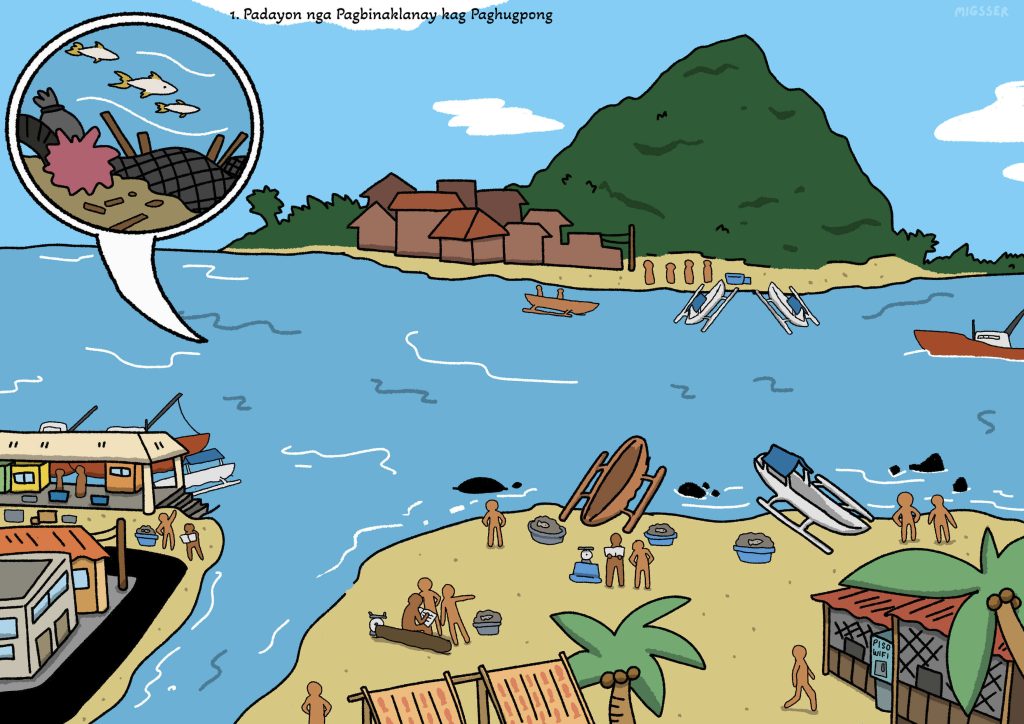
1. Holding on Together
Relationships still sustain the markets and buying and selling, there are more livelihood programmes around, but the ecosystem is facing a decline.
The suki is still there, present and strong, supporting most exchanges, an important financier of household and fishery needs. Brokers sa banwa especially. There is trust, but also quiet pressure — debts written down, obligations carried forward as the catch grows lighter.
Out at sea, the water looks tired. The corals are broken and pale, fish are fewer. Rules exist, but enforcement is often soft. The Government tries to support a livelihood approach. Some households raise pigs and are involved in bakery-trainings. There are attempts at small-scale aquaculture cages in the sea and seaweed growing is evident. But there are storms and hotter and hotter sea temperatures.
But the shoreline is still crowded, everyone knows each other. The community is held together — by relationships, by care — even as the sea continues to give less.
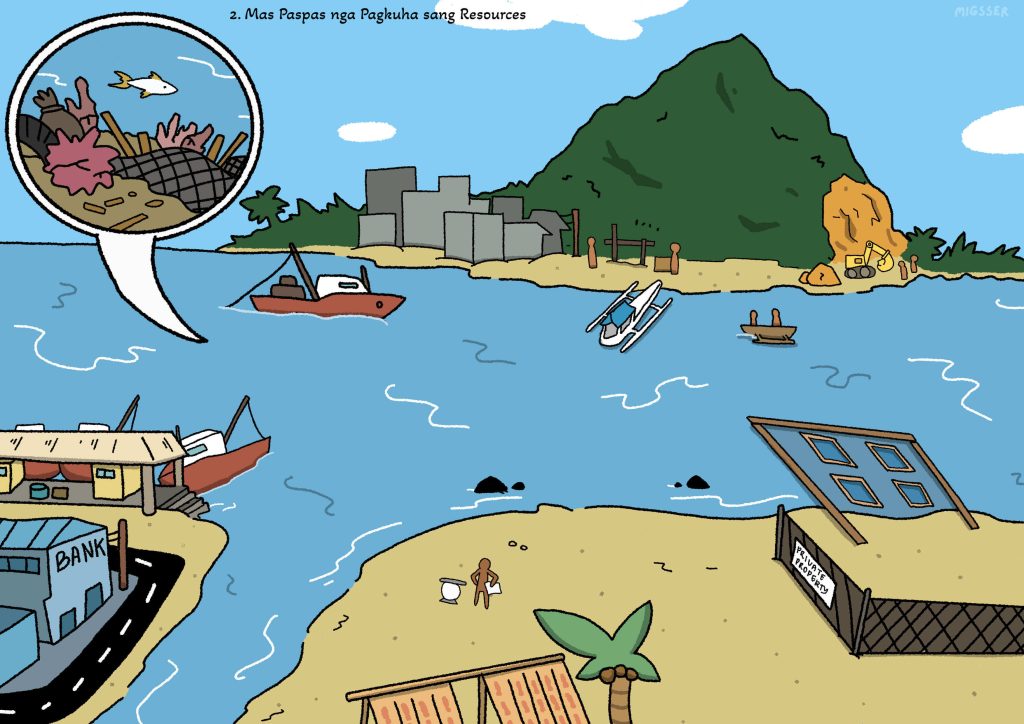
2. Accelerated extraction
The focus is on making profit from the market through larger catches and more sales agreements. More larger companies are entering seafood buying, aquaculture, and tourism.
There are new rules, new licenses and new permits for selling which means sukianay is less strong. The Government introduced buying programmes and contracts for selling, the focus is on supporting export and high-value species like kasag or lokus.
Now fewer buyers are available in pulo – many suki went bankrupt from supporting fishers as catches worsened. Meanwhile, only a few larger brokers remain at the port, they fund larger vessels. They also get less products due to the new programmes. Accompanying these programmes are new storage and landing facilities on the pulo – but many cannot use them as there are fees.
Often it’s not, pressure has intensified at sea, there are less baroto and smaller pump boats, but more bigger boats like likos. Fishers travel farther, burn more fuels, and catch less. Debts shifts beyond suki. People talk about loans — not just from suki, but from banks, apps, microfinance. Payments are due whether the catch is good or not. Industrial/bigger aquaculture and seaweed farming were introduced – owned by companies from outside. Companies move in to build tourist accommodation. Mining pan de azucar is back and moving forward. The focus on larger-scale activities and earning money from operating licenses/permits and taxes has led to less monitoring and enforcement of rules and regulations. Larger actors continue while smaller ones struggle to comply. The system expands, but instability grows with it.
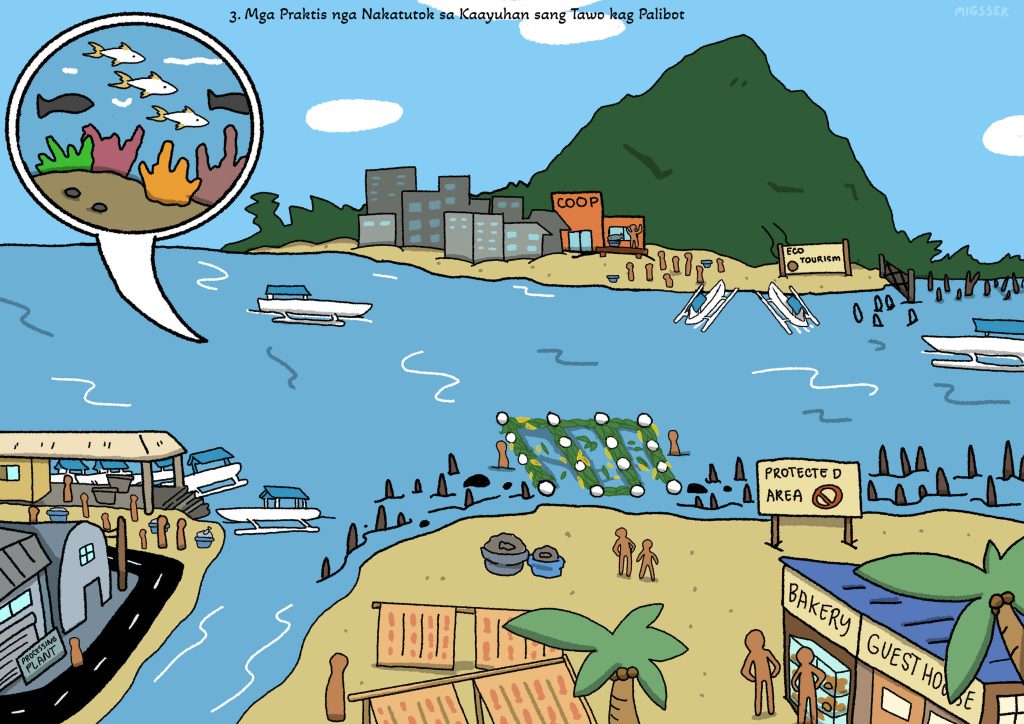
3. Practices Focused on human and ecological Wellbeing
Changing how relationships work to support recovery, through working together and adjusting everyday practices.
Onshore, sukianay is still there — but lighter. Fishers still land to their suki, but there is less pressure. Loans are smaller, easier to repay. Sometimes, fish are sold together through cooperatives. Buyers stand side by side, not just as patrons, but as participants in government conservation and trading programmes. There is more choice, but still trust. The sea is recovering through widespread efforts like mangrove planting, artificial reefs, and support for fishers during closed seasons. Fishers receive assistance during these periods including support for households with students. Small- scale aquaculture and seaweed projects run well and are designed with climate adaption and better insurance for wash outs. There is a tuloy processing plant on banwa now.
Livelihoods diversify. Shops, bakeries, and small community-based businesses are open sa pulo. Uga businesses are doing well and incorporate a lot of people needing incomes.
Tourists come for the healthier sea (Pan de Azucar Eco Tourism program).
Not everyone benefits equally from all the changes— some households still struggle to adapt as climate change is still impacting. Life is not rich, but it is steadier.
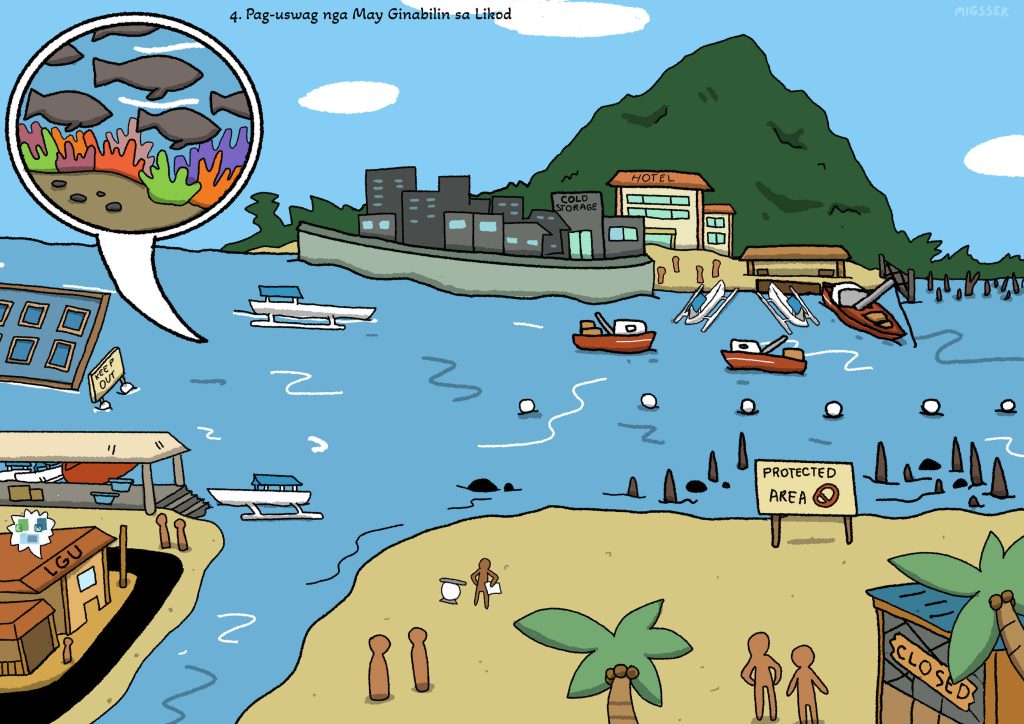
4. Growth That Leaves Some Behind
More stable systems linked to larger buyers and companies support ecological recovery through tighter control and fewer, larger actors, but not everyone can access or stay in the fishery. Sukianay is significantly weakened. Buying and selling happen through contracts, formal supply agreements, schedules, and seafood companies. Suki brokers and buyers have to follow standards and use digital tools – so it is not about the relationship as much. Fish are sold less in small, personal exchanges. Prices are stable, but decided elsewhere. Only bigger buyers and brokers really exist.
But the sea has recovered due to very strict government regulations so there are fish and other species to be landed. There are much more likos and trawls and more commercial vessels are seen out at sea. Fewer small boats go out as it’s harder to fish nearer the shore – large protected areas are marked off — no entry, no fishing.
It’s more difficult to access the sea from the beach, the coastline looks very different. Parts of the pulo shore are cleared. Seawalls stand where wooden houses once were. New structures sit near the water: cold storage, processing buildings, and other market buildings.
Some households are doing well — concrete houses, steady income, regular work. Others have shifted completely from fishing — working in construction, in fast expanding tourism, in facilities owned by others who are often from the city or Manila. Smaller shops (tchange) and community- based businesses are fewer. Aquaculture and seaweed companies operate in Concepcion waters in strict areas – however do not often involve people from the pulo.
The economy has grown. But the feeling on the pulo is different. There is more fish — but fewer people who can truly live from it.
Ini nga mga future scenarios ginbase sa mga interviews nga amon ginpatigayon sang Marso 2026 sa Concepcion, Iloilo—parte sa ginabatyag sang mga tawo sa nakaligad, subong, kag sa palaabuton sang fishery system. Ginlantaw man namon ang mga plano sang gobyerno sa sini nga lugar.
Wala sang “insakto” nga scenario—ini tanan imahinasyon lamang. Indi ini mga prediksyon sang palaabuton; wala sang may makahibalo gid kun ano ang matabo sa ulihi.
Ini nga mga posibilidad ginpresentar man namon sa mga fisherfolk agud madiskusyunan sang Abril 2026.
Ini nga exercise isa ka paagi agud mahunahuna kag ma-engganyo kita sa pag-atubang sang mga kawalay kasiguruhan sang palaabuton—nga mahimo makahaladlukan ukon makalibog para sa iban nga tawo ukon sa pila ka tion.
Kadalasan, makitid ang aton paglantaw sa palaabuton kag ginabase lamang sa aton kaugalingon nga mga huna-huna, gani ini nga exercise naga-bulig nga mapalapad ang aton paghangop.
Ang amon tema para sa sini nga mga scenarios amo ang importansya sang pagseguro sang pangisdaan kag pangabuhian sa merkado/baligyaanay sang mga tawo sa Tambaliza—sa paagi nga ila ginahamdum kag nga may maayo nga kahimtangan sang dagat.
Ang time frame sini amo ang palaabuton nga ang mga kabataan ukon apo sang mga fisherfolk dako na kag mga adulto na.
1. Padayon nga Pagbinaklanay kag Paghugpong
Ang mga relasyon amo gihapon ang nagadala sang kusog sa merkado kag sa baligyaanay kag baklanay. Bisan naga-damo ang mga programa para sa pangabuhian, ang kahimtangan sang palibot nagapadayon sa pagnubo.
Ang suki ara gihapon—malig-on kag masaligan—nga nagasuporta sa kadam-an nga transaksyon. Isa ini ka importante nga tagapondo sang panginahanglan sang panimalay kag pangisda, labi na gid ang mga broker sa banwa. May pagsalig sa ila relasyon, pero may ara man mahipos nga pressure— mga utang nga ginalista kag mga obligasyon nga ginadala samtang gagamay ang kuha.
Sa dagat, daw maluya na ang tubig. Ang mga korales naguba kag nagaputi, kag nagagamay ang kadamuon sang isda. Bisan may mga patakaran, indi gid permi mabaskog ang pagpatuman sini. Ang gobyerno naga-tinguha magbulig paagi sa lain-lain nga programa sa pangabuhian. May mga panimalay nga naga-alaga sang baboy, naga-upod sa bakery trainings, kag naga-testing sa aquaculture cages kag seaweed farming. Apang ginapinsaran ini sang mas mabaskog nga bagyo kag nagataas nga temperatura sang dagat.
Kag bisan sini tanan, ang baybay padayon nga buhi—puno sang tawo, kag kilalahay ang tanan. Ang komunidad nagapabilin nga hugpong, ginatib-ong sang relasyon kag pag-atipan—bisan pa gamay na lang ang ginahatag sang dagat.
2. Mas Paspas nga Pagkuha sang Resources
Ang pokus subong amo ang pagkuha sang mas daku nga kita halin sa merkado paagi sa mas madamo nga kuha kag mas damo nga kasugtanan sa pagbaligya. Nagasulod na man ang mas dagko nga sa seafood buying, aquaculture, kag turismo.
May mga bag-o nga rules, lisensya, kag permits para sa pagbaligya, gani nagaluya ang sukianay. Ang gobyerno nagpatigayon sang buying programmes kag contracts, nga nagapokus sa export kag sa high-value nga species pareho sang kasag kag lokus.
Subong, naganubo ang buyers sa pulo—madamo nga suki ang nalugi bangod ginbuligan nila ang mga mangingisda bisan indi maayo ang kuha. Samtang sini, pila na lang ka dagko nga broker ang nabilin sa pantalan, kag sila ang nagapondo sang mas daku nga sakayan. Apang bisan sila nagakabaton sang mas gamay nga produkto bangod sa mga bag-o nga programa. May mga bag-o man nga storage kag landing facilities sa pulo, pero indi tanan makagamit sini bangod may bayad.
Sa dagat, naglala ang presyur. Nagakagamay ang baroto kag gamay nga pumpboat, pero nagadamo ang mas dagko nga sakayan pareho sang likos. Ang mga mangingisda nagapalawod pa gid sa para mangisda, nagagamit sang mas madamo nga krudo, pero mas gamay ang ila kuha. Ang utang nagalapaw na sa sukianay—may mga hulam na halin sa bangko, apps, kag microfinance. Kinahanglan gid magbayad bisan maayo ukon malain ang kuha.
Ginpasulod man ang mas daku nga aquaculture kag seaweed farming nga ginapanag-iyahan sang mga kompanya halin sa gwa. May mga kompanya man nga nagaabot para magtukod sang mga pasilidad para sa turismo. Ang mining sa Pan de Azucar nagabalik kag ginapadayon liwat.
Bangod sa pokus sa mas daku nga operasyon kag kita halin sa lisensya, permits kag buwis, naganubo ang monitoring kag pagpatuman sang mga regulasyon. Ang dagko nga mga aktor padayon nga nagaubra, samtang ang gagmay nagapangatubang sang kalisod sa pagsunod. Nagadako ang sistema, pero nagadamo man ang kawalay kasiguruhan.
3. Mga Praktis nga Nakatutok sa Kaayuhan sang Tawo kag Palibot
Ang pokus amo ang pagbag-o sang mga relasyon agud suportahan ang pagbangon—paagi sa pagtinabangay kag pag-adjust sang adlaw-adlaw nga mga pamaagi.
Sa baybay, ara gihapon ang sukianay—pero mas mag-an na. Ang mga mangingisda naga-deliver gihapon sa ila suki, pero mas nubo na ang pressure. Mas gamay ang hulam kag mas madali ini mabayaran. May mga tion man nga ang isda ginabaligya paagi sa kooperatiba. Ang mga buyer naga- upoday, indi lang bilang patrons kundi bilang mga partisipante man sa mga programa sang gobyerno para sa conservation kag trading. May mas madamo na nga pilian, pero ara gihapon ang pagsalig.
Ang dagat nagapanumbalik paagi sa madamo nga paninguha pareho sang mangrove planting, artificial reefs, kag suporta sa mga mangingisda sa tion sang closed season. May bulig man nga ginahatag sa ila sini nga mga tion, lakip na ang suporta sa mga panimalay nga may naga-eskwela. Ang small-scale aquaculture kag seaweed projects nagaandar sing maayo kag ginaplano nga may pag-angay sa climate change kag may mas maayo nga insurance kontra washouts. May ara na man subong nga tuloy processing plant sa banwa.
Nagalapad man ang pangabuhian. May mga tindahan, panaderya, kag mga gamay nga negosyo nga ginadumalahan sang komunidad sa pulo. Ang mga negosyo sang uga nagauswag kag nagahatag sang trabaho sa madamo nga nagapangita sang kita.
Nagaabot ang mga turista bangod sa mas maayong kahimtangan sang dagat (Pan de Azucar ang Eco-Tourism program).
Bisan sini, indi tanan pareho ang benepisyo. May mga panimalay gihapon nga nagapangatubang sang kalisod sa pag-adjust, bangod climate change padayon nga nagaapekto. Indi man gid manggaranon ang kabuhi, pero mas nagiging sigurado kag mas estable ini.
4. Pag-uswag nga May Ginabilin sa Likod
May mas masiguro nga sistema nga nakaangkla sa mas dagko nga buyers kag kompanya, nga naga-suporta sa pagbangon sang palibot paagi sa mas hugot nga kontrol kag mas gamay pero mas dagko nga mga aktor. Apang indi tanan may kahigayunan nga makasulod ukon makapabilin sa pangisda.
Ang sukianay naghina gid. Ang pagbaligyaanay kag baklanay ginahimo na paagi sa kontrata, formal nga kasugtanan, iskedyul, kag seafood companies. Ang mga suki broker kag buyer kinahanglan magsunod sa mga standard kag mag-gamit sang digital nga mga pamaagi—gani indi na gid amo ka- importante ang relasyon. Nagakabuhin na ang ginagmay kag personal nga transaksyon sang isda. Ang presyo mas stable, pero ginadiktar na sa iban nga lugar. Pila na lang ka dagko nga buyer kag broker ang nabilin.
Apang ang dagat naka-recover bangod sa hugot gid nga regulasyon sang gobyerno, gani nagabalik ang isda kag iban pa nga species. Mas damo na ang likos kag trawl, kag mas makita ang commercial vessels sa dagat. Naganubo ang gagmay nga sakayan, kay mas budlay na mangisda malapit sa baybay—madamo nga lugar ginmarkahan bilang protected areas, nga bawal ang magsulod ukon bawal ang mangisda.
Mas budlay na man ang paglapit sa dagat halin sa baybay, kag naglain na ang hitsura sang baybayon. May mga parte sang pulo nga ginlimpyohan. May mga seawall na sa lugar nga sadto nga natindogan sang mga kahoy nga mga balay. May mga bag-o nga istruktura malapit sa tubig—pareho sang cold storage, processing buildings, kag iban pa nga pasilidad para sa merkado.
May pila ka panimalay nga nagauswag—may konkreto nga balay, masiguro nga kita, kag regular nga trabaho. Apang ang iban nagbalhin na gid halin sa pangisda—nagasulod sa construction, sa nagadamo nga turismo, kag sa mga pasilidad nga ginapanag-iyahan sang iban, halin sa syudad ukon Manila. Naganubo man ang mga gamay nga tindahan (tyangge) kag community-based nga negosyo. Ang aquaculture kag seaweed companies naga-operate sa katubigan sang Concepcion sa hugot nga mga lugar, pero madamo nga mga tawo halin sa pulo ang wala naga-intra.
Nagadako ang ekonomiya. Apang lain na ang pamatyag sa pulo. May mas damo nga isda—pero mas gamay ang mga tawo nga tuod nga makaistar halin diri.
- Allison, E.H., et al. 2011. Poverty Reduction as a Means to Enhance Resilience in Small-scale Fisheries. Small-Scale Fish. Manag. Framew. Approaches Dev
- FAO, 2018. The State of World Fisheries and Aquaculture 2018: Meeting the sustainable development goals
- Cohen, P.J., et al. 2016. Understanding adaptive capacity and capacity to innovate in social–ecological systems: Applying a gender lens. Ambio 45
- FAO 2015. Voluntary Guidelines for Securing Sustainable Small‐Scale Fisheries in the Context of Food Security and Poverty Eradication
- World Bank, 2012. Hidden harvest : the global contribution of capture fisheries
- FAO, 2017a. The relationship between the governance of small-scale fisheries and the realization of the right to adequate food in the context of the Sustainable Development Goals. FAO, Rome, Italy.
- Bennett, N.J., et al. 2020. The COVID-19 Pandemic, Small-Scale Fisheries and Coastal Fishing Communities. Coast. Manag. 48
- Johnson, D.S., 2010. Institutional adaptation as a governability problem in fisheries: patron–client relations in the Junagadh fishery, India. Fish Fish
- Kininmonth, S., et al. 2017. Microeconomic relationships between and among fishers and traders influence the ability to respond to social-ecological changes in a small-scale fishery. Ecol. Soc. 22.
- Fabinyi, M., 2012. Fishing for Fairness: Poverty, Morality and Marine Resource Regulation in the Philippines
- Crona, B., et al. 2010. Middlemen, a critical social-ecological link in coastal communities of Kenya and Zanzibar. Mar. Policy, Coping with global change in marine social-ecological systems 34
- Frawley, T.H., et al. 2019. Environmental and institutional degradation in the globalized economy: lessons from small-scale fisheries in the Gulf of California. Ecol. Soc. 24.
- Nurdin, N., Grydehøj, A., 2014. Informal governance through patron–client relationships and destructive fishing in Spermonde Archipelago, Indonesia. J. Mar. Isl. Cult. 3
- Crona, B., et al. 2015. Using social–ecological syndromes to understand impacts of international seafood trade on small-scale fisheries. Glob. Environ. Change 35
- Ferse, S.C.A., et al., 2014. To cope or to sustain? Eroding long-term sustainability in an Indonesian coral reef fishery. Reg. Environ. Change 14
- Stein, H.F., 1984. A Note on Patron-Client Theory. Ethos 12
- Cinner, J.E., et al. 2018. Building adaptive capacity to climate change in tropical coastal communities. Nat. Clim. Change 8
- Bailey, M., et al. 2016. Fishers, Fair Trade, and finding middle ground. Fish. Res., Special Issue: Fisheries certification and Eco-labeling: Benefits, Challenges and Solutions 182
- Drury O’Neill, E., et al. 2019a. From typhoons to traders: the role of patron- client relations in mediating fishery responses to natural disasters. Environ. Res. Lett.
- Drury O’Neill, E., et al. 2019b. An Experimental Approach to Exploring Market Responses in Small-Scale Fishing Communities. Front. Mar. Sci.
- Lau, J.D., et al. 2021. Gender equality in climate policy and practice hindered by assumptions. Nat. Clim. Change 11
- Schwartz-Shea, P., Yanow, D., 2013. Interpretive research design: Concepts and processes. Routledge.
- Pomeroy, R. S. 1992. Fish Marketing in the Philippines: Is the ‘Suki’ Symbiotic or Parasitic? Naga 15, no. 3 (1992)
- Turgo, N., 2016. ‘Laway lang ang kapital’ (Saliva as capital): Social embeddedness of market practices in brokerage houses in the Philippines. J. Rural Stud. 43, 83–93.
- Jessee, E., 2018. The Life History Interview, in: Liamputtong, P. (Ed.), Handbook of Research Methods in Health Social Sciences
- Morgan, D.L., et al. 2013. Introducing Dyadic Interviews as a Method for Collecting Qualitative Data. Qual. Health Res.
- Twyman, J.,et al. 2015. Gendered Perceptions of Land Ownership and Agricultural Decision-making in Ecuador: Who Are the Farm Managers? Land Econ. 91
- Simon, H.A., 1955. A Behavioral Model of Rational Choice. Q. J. Econ. 69
- Gigerenzer, G., Gaissmaier, W., 2011. Heuristic Decision Making. Annu. Rev. Psychol. 62
- Tversky, A., Kahneman, D., 1992. Advances in Prospect Theory: Cumulative Representation of Uncertainty. J. Risk Uncertain. 5
- Schill, et al. 2019. A more dynamic understanding of human behaviour for the Anthropocene. Nat. Sustain. 2
- World Bank, 2015. World Development Report 2015: Mind, Society, and Behavior. The World Bank.
- Harrison, G.W., List, J.A., 2004. Field Experiments. J. Econ. Lit.
- Folke, C., 2016. Resilience (Republished). Ecol. Soc. 21.
- Oteros-Rozas, E., et al. 2015. Participatory scenario planning in place-based social-ecological research: insights and experiences from 23 case studies. Ecol. Soc. 20.
- Ferrer, A.J.G., 2016. Fisheries Management Options for Visayan Sea, Philippines: The Case of Northern Iloilo.Springer Singapore
- Hamann, M., et al. 2018. Inequality and the Biosphere. Annu. Rev. Environ. Resour. 43
- FAO, 2017 Towards gender-equitable small-scale fisheries governance and development
- Meinzen-Dick, R.,et al. 2016. Games for groundwater governance: field experiments in Andhra Pradesh, India. Ecol. Soc.