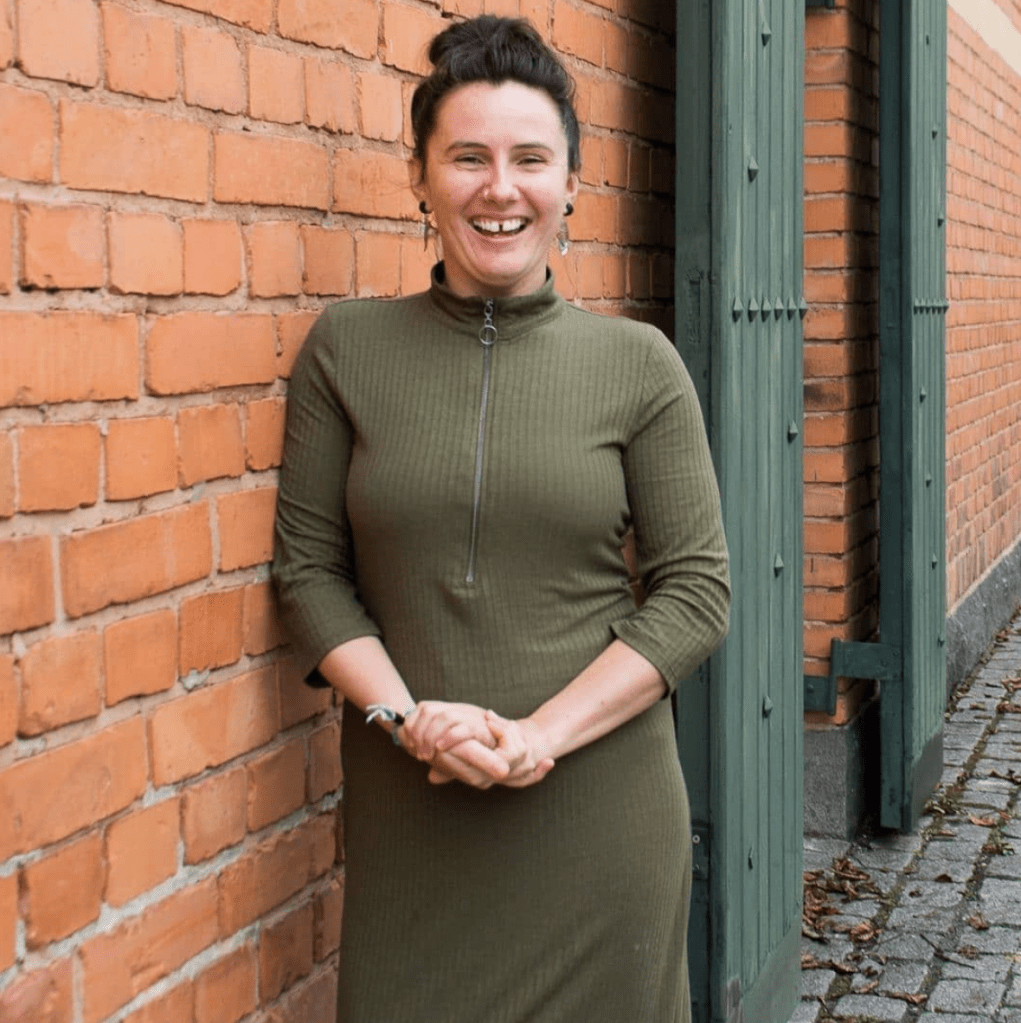
I think I would describe myself as a budding empirically driven marine social scientist. I have a background originally in marine science from NUIG (National University of Ireland Galway) and then marine biology in UALG (University of the Algarve). But after being in the natural sciences for a while it was during my stint at UALG I realized that what really drove me was better understanding/exploring the connection between people and the sea. Specifically, contributing to science that could better support people/groups/communities make a “good” life through and from the sea. While living in Portugal and seeing the huge amount of seafood consumption there (we Irish are a bit unsure of seafood 😛 especially compared to the Portuguese, the largest consumers of seafood in the EU per capita!) I got super interested in where the products where coming from and specifically WHO was benefiting from this production and consumption. Questions of fairness and (in)equality actually fuelled me more than purely interest and fascination with the ocean I realised. With that I headed off to Ghana to follow the tuna! Much of the John West tuna cans on the shelves of supermarkets had a Ghanaian stamp of origin- so I thought to myself, what are the Ghanaians getting out of this and what does tuna production look like there? I also thought to myself what do I want to do when I grow up? Work for somewhere like the FAO really and contribute evidence and learning towards sustainable resource use for poverty and food insecurity reduction. So I went on the FAO website and found a lot of their recent projects (this was 2012) were about “value chains” and “value chain analyses”. I said, ok let me do this for my Master Thesis about the tuna in Ghana! The rest was history as they say. They didn’t know what to do with me at CCMAR (Centro de Ciências do Mar) in UALG as I was very interdisciplinary and mixed methods (qual & quan) putting people and social dynamics into the ocean realm. I wrote my thesis in a box room as I didn’t fit anywhere! I ended up getting a PhD at the Stockholm Resilience Centre (SRC) which picked up on value chains but in small-scale or artisanal fisheries (Ghana was industrial/large scale fisheries). I have been at the SRC ever since (2014). I completed one postdoc between the OctoPINTS project, which I wrote the grant for with my buddy Emilie Lindkvist, and FoRel, run by the amazing María Mancilla García. From mapping small-scale fishery value chains in Zanzibar and the Philippines I’ve managed to get experience in many different methods, paradigms, and theoretical framings including behaviour economics & experiments, marine protected areas, community-based or collaborative conservation & natural resource management, interpretivism, participatory methods, qualitative coding, social wellbeing, fishery compliance, economic sociology and more!
 Liz Drury O'Neill