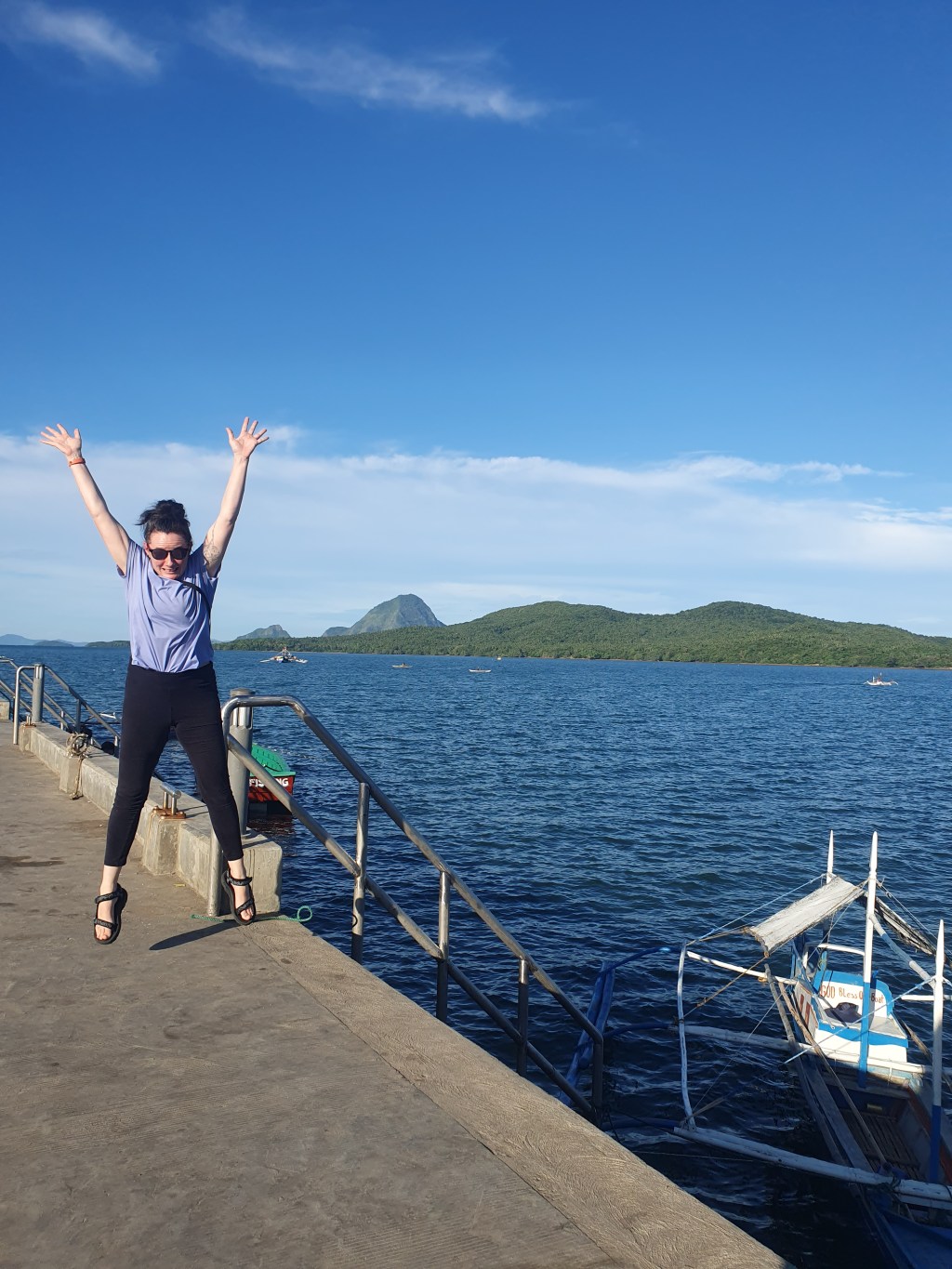
We are back to our second home here in Concepcion Iloilo- where I have been doing my research with fisherfolk since 2015. We have come back to Tito Alo and Tita Gina’s house of course out in the island Barangays of Concepcion. I feel so at home and comfortable in this island life as do my boys- even the big one! Sweden and Stockholm and the snow and cold feel so far away- it makes me wonder sometimes why I am there….but then I remember the social welfare type system which provides me with good health care and child care…. (although the right-wingers are slowly ruining the open supportive Sweden I thought I was in).
We have started the co-analysis process with traders, buyers, sellers, brokers and dryers and it’s bluddy amazing. I have been sharing the below figure with them (further down the page)- which is my first attempt to create a “theory” or explanation for how the suki system (patron-client relations in the Philippines) works. I have gotten so much amazing feedback!
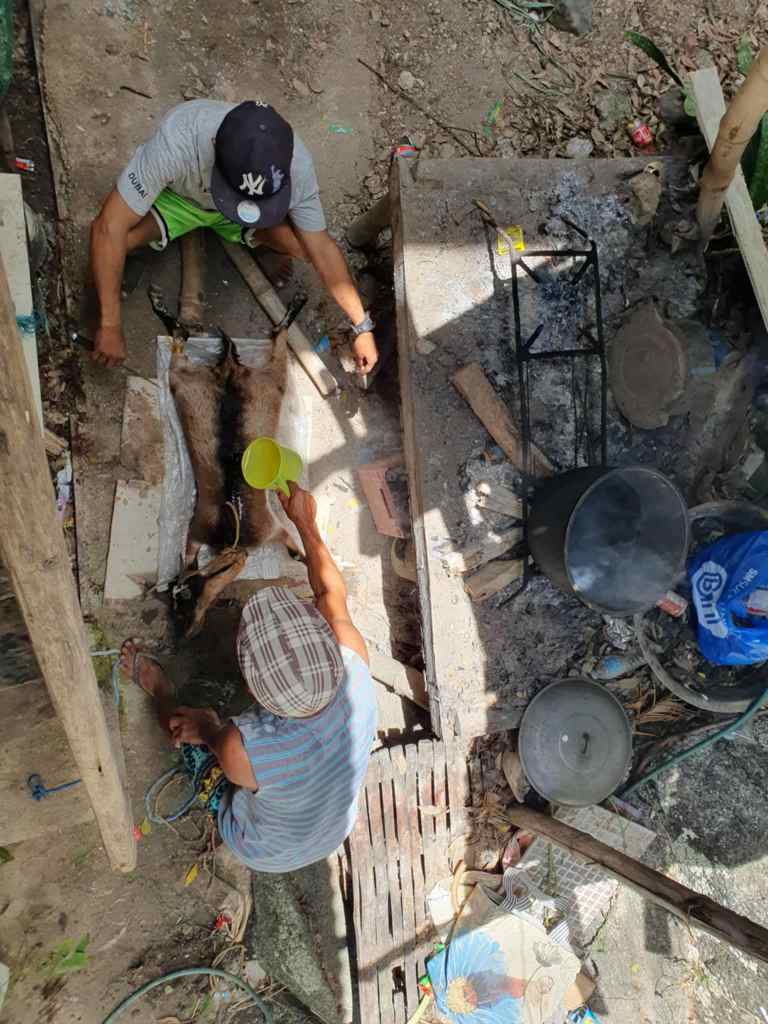
SEGWAY! I just turned around and there is a goat sacrifice happening behind me! They just cut her neck and are bleeding her out to collect the blood, and now they are blowing into her leg with a pipe through a hole they cut in her skin? Maybe its to get all the gases and wee wee out? Ah they just told me it’s to inflate her to get the hair off easier, they are about to pour boiling water over her to get the hair off. The men are Arbularyo- traditional folk healers/doctors who uses herbs, rituals, and prayers to treat ailments. They are often called upon for sicknesses believed to be caused by spirits, supernatural forces, or “usog” (sudden illness due to spiritual imbalance). Which is the case here, they were telling me they will use the blood to bless a new house my hosts just built, their son has been sick ever since they built it so there is potentially bad spirits there.
Ok back to sukianay (the suki relations)! Well first we did a courtesy visit with the Local Governmental Unit at the Mayor’s office. We talked to the head of operations there, the Mayors right hand man when he is not around. It was dead interesting. He asked us if we had heard of the Supreme courts’ decision to allow commercial vessels into the municipal waters of the Philippines- municipal waters being where subsistence fishers have fished in vessels 3 gross tons and under, within 15km of the coast. BUT NOW, even though smaller-scale fisherfolk in municipal waters have always had to deal with illegal commercial vessels removing their potential catch plus complete lack of social, financial and economic support from the Government, it’s been ruled ok for their waters to be further infringed upon. See my collaborator Dr. Alice Ferrer talk about the issue below. The FURY!
Concepcion has changed so much since I started coming here 10 years ago, its gone from a 3rd class municipality to a 1st class municipality- but what does that mean I asked the Mayor’s staff member? He said it’s the money the Local Governmental Unit has each year to spend- their income. I said how do you make more money then as a Governmental Unit? He said its about inviting in business, the biggest for Concepcion being the coal plant (Palm Concepcion Power Corporation). With business comes the money- the permits, the rents, the fees that big business pays. At the same time one common disturbance that fisherfolk on the islands talked about was the coal plant, its building (which included a big pier/jetty) plus its effluent damaged fishing grounds and continues to do so all around Concepcion. I’m sure though it also brought jobs and employment to locals in the area? Plus in increasing the Governmental Unit’s income surely they can provide more services to fisherfolk on the 12 island Barangays of Concepcion? Whose seafood catch makes Concepcion known across the Philippines plus whose crab landings are relied upon for international export. I’m not so sure……..with lack of public electricity, WIFI and any health care on the islands? It seems to me the fear of a previous Mayor’s legacy project overshadowing one’s term in office and upcoming elections don’t allow for the fisherfolk here to get the support they should from the men who “serve” them.
ANYWAY back to sukianay- we have got such great feedback from fishers and buyers and brokers (at the Port), I have a lot to fix! Julie (my co-researcher here) and I have been going around with a huge tarpaulin of this drawing below and asking questions like;
- Does anything surprise you? Something unexpected?
- Does this fit with your experience?
- Is there anything you think is wrong?
- Do you think I’m missing anything?’
- Is there anything important about sukianay not here?
- Do you feel your opinions and experiences of sukianay are reflected here?
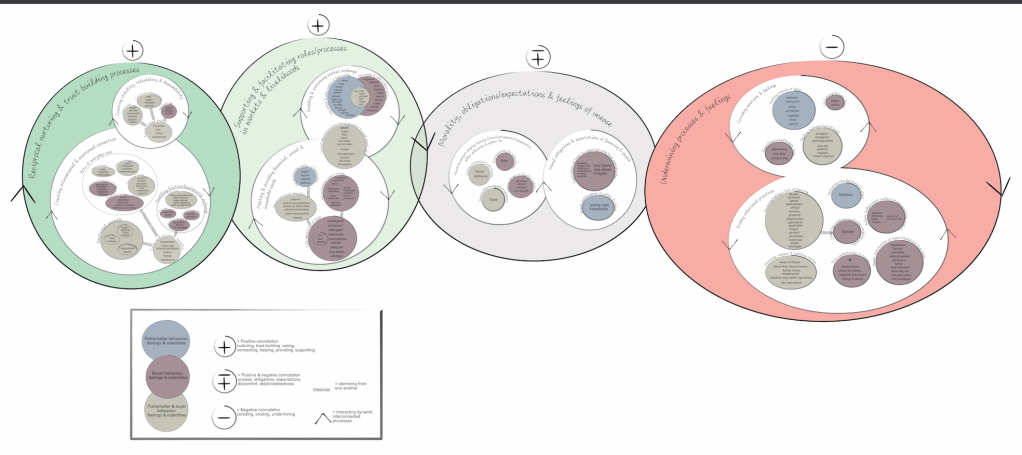
The drawing summarises the words, feelings, processes and descriptions participants last year used to talk about sukianay- I kept all the main concepts in Hiligaynon- the language here. So for example:
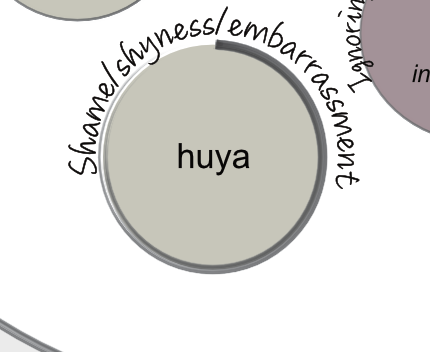
“Huya,” “mahuya,” “nahuya,” and “mahuloyaon” are terms relating to shame, embarrassment, or shyness. They significantly influence the dynamics of “sukianay” relationships, “huya” often arises when borrowing money or having outstanding debts. “Huya” can emerge when you are unable to pay what is owed. People may feel “mahuya” to borrow from their “suki” if they already have a large debt but ultimately they need to ask their suki-buyers for help as they are the ones they turn to- kay teh patay mo nalang huya mo tungod sa kinahanglanon mo- so you would just kill your huya because you need it. (TGE– crab fisher).
So we have gone through the trust and nurturing aspects of the relationship (the big green circles), the positive and negative concepts like huya (the grey 3rd circle) and then the negative processes and feelings that disrupt the relationship.
Feedback has included important points such as
- how the SOURCE is missing, it all depends on the fish catch, and thats not captured in the diagram, the seasonal nature of the fishing and closed seasons etc. No fish = no sukianay, the sukianay is inextricably linked to the marine ecosystem and this should be highlighted. (doh Liz!)
- how the different fishery types enact different types of patronage such as tuloy (a type of sardine) which is low quality and hard to sell, often there are no suki buyers for this, its just delivered to the port, vs tabagak (another type of sardine) which is valued and then kasag (crab) again which had other patronage dynamics more linked to global markets.
We continue around to all the Sitios we visited last year and learn as we go! We want to improve this grounded theory of patronage relations for adaptation to market and environmental change and also want to let people know we would love for them to join us in march for behavioural economic experiments!
Thats all for now!

 Liz Drury O'Neill
Leave a comment